Music Wonkery

Where we think deep, musical thoughts.

Polly Wanna ROCK!!!

For the metal fan who thinks he's heard it all, I proudly present Hatebeak, a death metal band featuring a parrot on lead vocals. No, this is not a joke. You can download their song "God of Empty Nest" from the album Beak of Putrefaction from Reptilian Records' website if you don't believe me.

From the same site you can also download the excellent "Let Them Eat Rock," by the Upper Crust, a metal band who do AC/DC parodies dressed up as French dandies. They also had a song I usedta like called "Friend of a Friend of the Working Class." Priceless, in that if you have to ask the price, you can't afford it.

Posted by Johno Johno on   |   § 3

If David Gilmour Could Hear Me, He Would Cry

I seem to be in the midst of a musical suck cycle.

Everything I play lately sounds like I'm scraping poop over a screen door. Not that I was ever especially talented, but I did have some measure of competency in getting first position chords together for God's sake; even that's sounding half-assed. But the memory-feel of the strings under my fingers is exactly right.

And also, lately my amp isn't...well, it isn't helping. Is it that time of year or something, where the vagaries of temperature change, barometric pressure, humidity, melting snow, deepening mud, lunar phases, and de-hibernating wildlife unite to affect the atmosphere in such a way that I sound like poop?

Clean channel, overdrive, super-ultra overdrive, effects loop on or off, all sound about equally scatalogical. Everything coming out of the amp sounds mushy, I can't get a decent tone to save my life, and once I just surrender to sounding like I'm underwater and play something, I end up with the aforementioned turd/mesh matrix.

Last night I went through some leads I've known...or, apparently, USED to know. After a solid hour's worth of attempts I just couldn't try anymore. I was too frustrated and, frankly, embarrassed, with Lady Lethal within earshot, to continue. I tried to play it off, you know, a little humor, with something like, "Sheesh, do you know what it's like to suck so badly?" To her credit, she didn't reply with the obvious answer, "Do you know what it's like to have to HEAR someone who sucks so badly?"

I've been in these cycles before and am hoping this is just another trough before a period of great coolness. Because it works the other way too, where you just plug in and you surprise yourself at the improbably cool stuff coming out of your amp. I just don't recall a trough quite this deep or lengthy.

Is anyone else having this problem?

Posted by GeekLethal GeekLethal on   |   § 8

Forever True

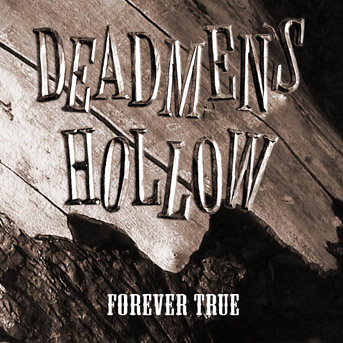
As loyal readers know, my lovely wife Mrs. Buckethead is in a band. Dead Men's Hollow plays what they like to call 'Acoustic Americana,' a blend of bluegrass, old school country, blues and gospel. Yesterday, the little brown Santa, UPS, delivered several hundred pounds worth of their debut, full-length CD. It's called Forever True:

Forever True

So, in honor of this momentous occasion in the history of music, here are some links:

DMH has come up in the world quite a bit over the last year or so. Despite losing half the band at one point, a psycho significant other (she actually said, "I'm not trying to be Yoko Ono") and the Bob the base player feeding his hand into a wood splitter, they have persevered. The vocal harmonies are tighter, sweeter and better than ever. And now the hard work is paying off - they're getting good reviews, playing bigger venues, and generally kicking ass. At first, in the early days, I have to admit that I went to the shows because it was my wife's band. But I have to say that even were she not my wife, right now I'd still really dig this music. Check it out.
 

Posted by Buckethead Buckethead on   |   § 4

The Reverend gets religion

The Reverend Horton Heat - Revival (Yep Roc, 2004)

Over the course of fifteen years, the Reverend Horton Heat has explored every possible variation on rockabilly punk. This means that, like the Ramones, when you buy one of his records you pretty much know what you're going to get - a dozen or so loud songs about cars, drinking, women, and kicking ass. When you do one thing for so long, the only way to remain vital is to begin digging deeper. For The Reverend Horton Heat, this means drawing on his new found maturity: in the last few years, he has lost his mother, lost a friend to heroin, and had a new baby. For the first time his life experiences inform his music.

Although his new album Revival, (2004, Yep Roc Records) kicks off with the now-obligatory fast guitar instrumental that starts most of his records (this one called "The Happy Camper"), the very next song is a bewildered and heartsick lament that he's still alive but not happier (“I've done my share of stupid things, I regret to say / And whatever I may do now, time may not repay / I'm just looking for revival, today may be the day”). Unlike in the past, where his "tragedy" songs were done with tongue firmly in cheek, now Heath is delivering the goods for real. It is a matter of degree, but for the first time a Reverend Horton Heat song hits close to home. However, lest you think the good Reverend has gone all emo on us, he follows right up with "Calling In Twisted," a little ditty about using “the fake cough" when calling off work.

For those among you who have not been initiated into the secrets of the Heat, The Reverend Horton Heat is James Heath of Texas, the tattoed guitar slinger at the vanguard of the punkabilly movement since 1991. Author of classic songs like "I Like Steak," "Bales of Cocaine," "Livin' on the Edge (of Houston)," "Nurture My Pig," "It's Martini Time" and "Big Sky," Heath has been touring constantly for years, bringing his mix of hepped up rockabilly, punk, and sleazy greaser attitude to audiences around the world.

In his early days he was taken under the wing of heavies like Gibby Haynes (who produced 1993's The Full Custom Gospel Sounds of the Reverend Horton Heat) and Al Jourgenson (who produced 1994's Liquor in the Front). He has sinced moved on to an ongoing relationship with veteran producer Ed Stasium. Although albums helmed by Stasium typically sound like they were recorded on one microphone in a parking garage, in the case of the Reverend this actually works, since Stasium's simple bass-drums-guitar-plenty o' reverb setup gives added dimension to the band's attack.

Despite the discovery of these heretofore unsuspected depths to Jim Heath's psyche, Revival is still vintage Heat. He still plays guitar like a demon, spraying notes like a firehose over top of Jimbo Jones’ slap bass and Scott Churilla’s metalbilly drumming. As usual the Reverend raises a respectable ruckus, and as usual by song number fifteen the well has run a little dry. The newfound depths suit him well, but for all its strengths, Revival is less consistent than some of his older albums. If you’re a fan, it’s worth having, but if you are new to the Rev, there is no beating the manic punch of The Full Custom Gospel Sounds of the Reverend Horton Heat. Kudos to Yep Roc for landing the Reverend, but if they have another record in the contract, next time their A&R department should hold the Rev to a dozen great songs total.

yeproc.com

Posted by Johno Johno on   |   § 0

Round one, fight!!!

Herbie Hancock - VSOP: Live Under The Sky (Columbia Legacy, 2004)

The 1970s were a funny time for jazz. Even as jazz musicians broke new ground and some rock audiences embraced jazz fusion, the market for straight acoustic jazz was withering away to nothing. In a way it makes perfect sense. The best jazz fusion-- Weather Report, Herbie Hancock's Headhunters, even Miles Davis' cocaine-fueled funk-rock tirades-- were aimed explicitly at a consumer audience with ears for electronic sounds and straight 4x4 rhythms. On the other hand, acoustic jazz in the 1970s was in general a distinctly post-everything affair. All the old movements had run their course or had gone back underground, and there wasn't much development going on to keep casual jazz fans from putting on a Sly Stone record instead.

Naturally, this state of affairs led to some very fine music being made and immediately filed away without release. Columbia Legacy (an appendage of Sony) has begun pulling out some of these old never-weres and finally giving them a US release. Even if the jazz audience in 2005 is just as small and far more fickle than in 1977, Columbia/Legacy's new-old releases show us that looking backward sometimes means finding out just how much we missed the first time around.

VSOP was an on-again off-again supergroup consisting of the four backing members of Miles Davis' second quintet. Without Davis to guide (dominate) them, Herbie Hancock became the de facto leader of a quartet that also included Wayne Shorter on saxophone, Tony Williams on drums, and the ubiquitous Ron Carter on bass. The group toured and recorded in 1977, then reconvened every so often through the early 1980s. They were big in Japan, their domestic popularity crippled by accusations from the jazz establishment that their fusion experiments had desecrated the hallowed legacy of jazz itself.

VSOP recorded the double live album VSOP: Live Under The Sky direct to digital tape over two nights in Japan in 1979 in front of an enthusiastic audience, with each night’s (identical) set included in full. Living up to the great 70s tradition of killer double live records (see: Frampton, KISS, Queen, Zappa), Live Under the Sky is a world-beater, a stunning, white hot, smack-your-mother tour de force of post-everything acoustic jazz.

A clue to how the album is going to unfold comes when the band bites into the opening "Eye of the Hurricane" at about 260 beats per minute. Within 90 seconds drummer Tony Williams is beating the brains out of young Freddie Hubbard. I mean, beating the brains out of him. Leaving Ron Carter to provide the bedrock rhythm, Williams breaks into a dizzying array of pounding fills, kicks, cross-rhythms and subthemes beneath (and over top of) Hubbard's solo, putting the young trumpet player on notice that he better bring it and good. Hubbard responds with a solo of dizzying virtuosity, repaying Williams in kind. Throughout the number Williams spars with his bandmates, completely abandoning the beat under Hancock's solo in favor of a barrage of rhythmic commentary on Hancock's playing. The resulting musical dogfight finally resolves with both Hancock and Willams dropping out to let Carter walk the bass for a minute before the whole band comes back to the head, finally laying out into the serene and beautiful next selection, "Tear Drop.” For the next hour, the entire band tear into song after song with boundless creativity and power.

Lest I give you the impression that the entire record consists of two discs of musical ultimate fighting deathmatches, I must hasten to mention that about half the selections are cool downtempo meditations. More than just breaks to allow us and the musicians to catch their breaths, beautifully rendered performances of "Tear Drop," "Para Oriente" and others find the group exploring textures, harmonies and intensities of emotion in ways that frantic workouts just won't allow.

There is something mind-boggling about listening to four (five) players among the greatest of all time leaving behind all the rules and just playing whatever feels right in the moment. With nods to everything - bop, modal jazz, cool jazz, Mingus-style third stream suites, free blowing a la Ornette Coleman, the group move in and out of song structures, extending, reiterating, and demolishing at will. Interestingly, the extended post-bop VSOP are doing here is the stylistic exact opposite of what most of its members were pursuing in their day jobs. The Headhunters (Hancock) and Weather Report (Shorter) were exploring space, extended funk jams and newfangled electronics, and Williams was recording noisy jazz-punk with Ronnie Montrose. By way of contrast, VSOP relied on the tried and true devices of acoustic instruments and bop harmonies. Live Under The Sky comes on like a Cassius Clay uppercut. A thrilling, breathtaking, incredible live set from five players in perfect tune.

Herbie Hancock's recorded output is both extensive and spotty, and it can be difficult for someone just getting acquainted with his work to know quite where to begin. Both VSOP: Live Under The Sky and its Columbia/Legacy partner release The Piano deserve a place on every jazz fan's shelf as major contributions not only to the work of one the greatest living keyboardists but to the state of the art of jazz.

www.columbialegacy.com
www.herbiehancock.com

This post also appears at blogcritics.org. Blogcritics.org is clinically proven to prevent heart disease, the staggers, dropsy, and aftosa.*

The Ministry of Minor Perfidy is not clinically proven to prevent heart disease, the staggers, dropsy, or aftosa.

Posted by Johno Johno on   |   § 0

The pugilist at rest

Herbie Hancock - The Piano (Columbia/Legacy, 2004)

Herbie Hancock was a very busy man in the late 1970s, and he was doing it all for the love of the music. Although his flagship project, the Headhunters, were meeting with worldwide success, his other projects were less well received. His work with the VSOP quartet was released mainly in Japan, as was his 1977 solo piano recording The Piano. Thanks to a renewed interest in quality jazz music regardless of when it was recorded, Columbia Legacy (an appendage of Sony) is now giving a number of excellent lost albums their first US release.

Originally intended for release only in Japan thanks to limited interest in acoustic jazz at home, 1977's The Piano is a sort of counterpart to Hancock’s turbulent post-bop work with VSOP and the electronic funk of the Headhunters. One of the first albums to be recorded digitally, Hancock intended The Piano as a sort of homage to the way records were made in the early days of jazz. For this album, he used a technique called direct-to-disc, in which the player or players choose three or four songs totalling the length of an LP side (in this case 16 minutes) and then play them live consecutively, leaving enough space between each selection to allow for a good spiral groove to separate them.

In this case, Hancock selected for side one three songs closely associated with Miles Davis; “My Funny Valentine,” “On Green Dolphin Street,” and “Someday My Prince Will Come,” and for side two four original compositions. Playing alone, Hancock ran through each of the seven songs in sequence three times and made an album out of the best overall take. Although reminiscent in a way of Bill Evans' landmark triple-overdubbed solo piano album Conversations With Myself, Hancock’s aim is very different – here the conversations are monologues and silence is an instrument.

Displaying the sensitive touch and harmonic ear he is known for, Hancock deconstructs his selections and pensively turns them inside out, searching for their emotional core. Moving far beyond jazz and the lounge-piano cliches that come so easily on the standards chosen, Hancock turns "My Funny Valentine" into a study in Romantic-era harmony, sounding more like French composers Erik Satie or Maurice Ravel than Miles Davis or Bill Evans. Part of this is due to the extended chords Hancock chooses, painting sheets of suspended notes over chords and decorating his melody with sotto voce runs and fills.

Hancock give each selection a similar treatment, turning each one into a perfect little jewelbox of gorgeous and brilliant playing. Like a Japanese painting done on the thinnest of papers with the fewest possible strokes of a brush, The Piano is an expressively minimalist exercise in taste and restraint. Moreover, that it comes from the same man who was in the same period wrangling a synthesizer in the Headhunters and sparring with VSOP is positively stunning and a little unbelievable.

Herbie Hancock's recorded output is both extensive and spotty, and it can be difficult for someone just getting acquainted with his work to know quite where to begin. Both The Piano and its Columbia/Legacy partner release VSOP: Live Under The Sky deserve a place on every jazz fan's shelf as major contributions not only to the work of one the greatest living keyboardists but to the state of the art of jazz.

www.columbialegacy.com
www.herbiehancock.com

This post also appears at blogcritics.org. Blogcritics.org: providing you with the best in bloviation and media punditry since 1323.

Posted by Johno Johno on   |   § 0

Random Post About Random Play

I have been enjoying the Ministry's winter hiatus, what with its replacement by all-new episodes of The Johno Experience. But with Johno still grappling with his Dickensian illness, I can't expect him to carry the whole weight of perfidy.org by himself. So here's a lame post, just for the sake of Johno getting a nap.

First of all, being the real supabad cat he is, I can't accept Johno's illness with its current 19th century flava; might as well go to the corner barber for a shave and a leech treatment with a condition that sounds like that. I recommend rebranding his illness to better reflect the look and feel of his trademarks. Go with "Promentalshitbackwashpsychosis" for now; if Clinton raises a stink, pacify him with crack.

Second, the thrust of my post.

I've had this job for over four years now, most of it with the same computer. And my iTunes library is starting to show it. Now, up until about two weeks ago I just played whole albums, typically one or two per day. Then I hit "random" accidentally. Every stereo I've owned in the past exhibited some sort of preference, whether for a certain song or, in the case of multi-disc changers, certain records. Seemingly, Macs are no different in this regard. Here's what I've learned so far:

In any given work period, I WILL hear "Shakin' Street" by the MC5.

This machine really digs the Minutemen. Way more than I do, actually, and has a penchant for "Bob Dylan Wrote Propaganda Songs".

There is alot of Metallica here. All of it, in fact, except for "Kill 'Em All". There is enough selected at random to make sense but, what are selected, by a ratio of roughly 3:1, are covers by Metallica, not originals.

Since I began paying attention to this random play I have not heard a Stooges song, but have "Fun House", "The Stooges", and "Raw Power" all in there. Nor is it a fan of Black Sabbath or Art Blakey.

About once every two days I'll hear Mahavishnu Orchestra, but ONLY a selection from the first half of "Birds of Fire", and only once.

I have about 60 Otis Redding tracks and maybe 50 Rage Against the Machine tracks, but any of the 12 Count Basie/Joe Williams numbers outplays the others by at least 3:1.

If it's going to play either Lou Reed OR David Bowie, it's never before 12 and solely live material.

This computer doesn't mind metal, and will take Slayer over any other fucking metal in the library. Metal!

This study will continue indefinitely; further updates as events warrant.

Posted by GeekLethal GeekLethal on   |   § 0

Fried Chicken and Corn Liquor

Southern Culture on the Skids are one of those bands who always seem to be punching above their weight. Certain groups' stardom, in retrospect, has an air of inevitability about it. U2 are the biggest band in the world, and it's practically impossible to imagine that under different circumstances of taste and timing, The Joshua Tree and War could be practically unknown masterpieces, circulating quietly among music collectors with a quiet fervor today reserved for test pressings of legendary Sun Ra sides and the like. Elvis Presley is so encoded in the DNA of pop music that his obscurity is literally impossible to imagine.

Not so with North Carolina stalwarts Southern Culture on the Skids. First of all, their goals are more modest. They don't do pop anthems or minutely crafted gems of timeless style. They are a party band who have survived through twenty years, eight albums plus an EP, and a couple label shifts, all the while sticking true to a fairly limited set of dependable tricks. These days, SCOTS sound a bit like the B-52s with less camp and more competence (and if you happen to think that this means they're missing all of what made the B-52s great, well then that's your own opinion), or like the Cramps' college-bound younger sibling. Last year they released their eighth LP, Mojo Box, on Yep-Roc Records. I will say this: fans of surf-rock, Southern college town party music, psychobilly, or twisted garage country owe it to themselves to own one Southern Culture on the Skids record. But is this the one?

My personal favorite high point in SCOTS' career came on 1996's Dirt Track Date (DGC). It was the left-field radio single “Camel Walk,” in which lead singer Rick Miller exhorted us in a laconic twang to “walk... like a camel” that got me. “Camel Walk” was a loopy slice of off-kilter rockabilly that lurched and heaved along with a sideways smile, achieving in the process half-accidental greatness. Although it is unfair to measure a group against one three-minute thing they did ten years ago, I can't help it. Either SCOTS have another “Camel Walk” in them or they don't.

All of the foregoing certainly reads as though I were winding up to chuck Mojo Box into the nearest river and to trash Southern Culture on the Skids as pale imitations of imitations, ten years past their sell-by date. The funny thing is, I'm not. In spite of their fixation on songs about trailer parks and country livin', in spite of the jokey/hokey aspects of their two-chord surfabilly sound, in spite of the fact that my CD collection has literally dozens of golden-age rockabilly selections that sound a lot like what Southern Culture on the Skids are doing in a more mannered and therefore less inherently fascinating way-- in spite of all this, Mojo Box is a truckload of fun. On their last few albums the band seemed to have lost focus, relying on gimmicky novelty songs to carry them through. By way of contrast, Mojo Box represents a return to form: a lean, dandy album of greasy stomps, twangy guitars, and good songs. That they have figured out how to do this again after ten years in the (more or less) wilderness is only a plus, as they are older, smarter, and better at what they do.

There's something to be said for a band who know what they want and how to get it, even when that something is to make har-har party records to drink beer, eat fried chicken, and drive fast to. Even if Mojo Box lacks anything quite as perfectly nutty as “Camel Walk,” the happytime twang of “Smiley Yeah Yeah Yeah,” the greasy, slinking “'69 El Camino,” the plaintive balladry of “Where Is The Moon,” and bassist Mary Huff's lead vocals on “Soulful Garage” make it all up. They can play, they can sing, they can write, and they can raise a Friday-night ruckus. Although hemmed in by their down-home conceits and the inherent limitations of the college town surf-rockabilly genre they inhabit, SCOTS manage to turn in thirteen entertaining, energetic performances that never resort to cliche for simple lack of good ideas.

So is this the one to get? Well... sure. It’s better than their last couple of records and has held up through more than a dozen runs through my auto-repeater, so I know Southern Culture on the Skids built Mojo Box to last. I have to put in a strong word for Dirt Track Date as well, partly because it contains all their early favorites in rerecorded form, making it a sort of midcareer greatest hits, but Mojo Box stacks up favorably, making a case that another time and place, Southern Culture on the Skids could have been as beloved as the King himself (or at least the B-52s, or Sleepy LaBeef, or Carl Perkins).


www.yeproc.com

This post also appears at blogcritics.org. Blogcritics.org is clinically proven to build healthy teeth and bones.*

*Blogcritics.org is not clinically proven to build healthy teeth and bones.

Posted by Johno Johno on   |   § 0

This is no good at all

Jazz organ giant Jimmy Smith is dead. Eric Olsen at Blogcritics (linked) has the obit. This one hurts me a lot, actually. I have spent hours and hours listening to Jimmy's records and playing along on the bass. His footwork was funky, tight, and groovy, and my ability to dig a deep groove owes in large part to him. Man... and I was still hoping to see him live.

Posted by Johno Johno on   |   § 0

The Way He Were

Let me get a little personal here. Go, go fetch a drink and a crying towel; I’ll wait.

Back in 1996, just after I graduated college, I drifted for a time rootless and aimless. After a summer whiled away drinking gin and tonic and reading books, I moved to Pittsburgh for lack of anything better to do. At the time, I wasn't in the greatest shape in any sense, thanks to a late college regimen of heavy drinking, late nights, a succession of (let's call them) 'thorny interpersonal relationships,' and world class self-flagellation. It wasn't a very good time.

Pittsburgh was a good place to be. I met some people and became a regular at a couple of the less reputable drinking establishments in Squirrel Hill. One night I was abducted and forcibly exposed to nudie bars. Thus it went that my first year after college was a time of assing around, personal growth, and various indeterminately enjoyable false starts.

Sometime in the summer of 1996, I picked up Freedy Johnston's album, This Perfect World (Elektra, 1994) on the strength of a review I found in an old music magazine. It came along at a perfect time. I listened to it constantly, sometimes letting Freedy sing me asleep (some would call it passing out) on the couch after last call.

The first song on This Perfect World, "Bad Reputation," seemed to sum everything up for me at age 23. The first verse went, "I know I got a bad reputation, and it isn't just talk talk talk / If I could only give you everything, you know I haven't got / I couldn't have one conversation, if it wasn't for the lies lies lies / And still I want to tell you everything until I close my eyes and suddenly I'm on the street / seven years disappear below my feet / Do you want me now, do you want me now?" Seventy five words contained everything that my little Holden Caulfield mouth had been trying to say for months and months to all my friends and former associates. Right there in music was everything I needed to get off my chest.

Freedy Johnston is very good at that. Robert Christgau called 1992's Can You Fly (Bar/None)

... a perfect album. Not a world-historical album or a ground-breaking album or even a concept album; not an album that will grab you by the neck and change your life. Just a perfect album - thirteen songs, thirteen discrete, discreet little moments that connect lyrically and stick musically

If anything, Freedy Johnston is the master of the musical short story, the Eudora Welty of the rock world. Each one of his songs is a perfectly self-contained snapshot of a moment or a feeling complete with a history and a future (if you care to imagine it) with all the loose ends tied up and not a word wasted. His melodies and arrangements tend to be simple, pleasant and catchy, and his music inhabits the middle ground between simple folk and four-chord rock. In a way he’s the opposite of Springsteen, who is all about the grand gesture, the fist in the air, the tornado and blood on the highway. Freedy Johnston is about the hand on the shoulder, the whispered secret, and the love letter delivered years too late.

The centerpiece of Can You Fly is the title song about a farmer and his son who come across something in their fields. Over a quiet bed of acoustic guitar and mallet percussion, Johnston sings,

Can you hear me?
Now the wind is dead
You fell from the cloud,
In the frozen mud
Can you see me
And my idiot son?
Down in golden light
Thrown out of the dark you came
Down down down down
on a midnight storm.
Down down down down
on a midnight flash.
We've all been looking at you,
I must know, is it true?
Can you fly?
Can you fly?

Can you hear the wind?
Now the light is dead.
You flew from your bed
Woke up on the floor
Can you fly tonight?
From my pointless fence?
Back up to the cloud
Up into the wind you came
Down down down down
on a midnight storm..
Down down down down
on a midnight flash.
We've all been looking at you,
I must know, is it true?
Can you fly?
Can you fly?

Is it an angel? Is it a metaphor? Who can tell? This is a perfect little lyric, utterly descriptive, finely drawn, and full of hidden nuance (Why is the fence pointless? Was it poorly built? Did the crop fail? Were the cows all sold?), and this is what Freedy Johnston does best.

Unfortunately, he didn't do it for very long. To my ears at least, Johnston started on a path of diminishing returns with 1996's Never Home (Elektra, 1997), tracing a career path a bit like Elvis Costello's post-Armed Forces. His albums have their charms, but they cannot help being measured against his first few and often found wanting. For this reason, I found the new Bar/None compilation of early Freedy Johnston demos, amusingly called The Way I Were, particularly intriguing.

Recorded on four-track between 1986 and 1992 (the year he made Can You Fly), The Way I Were chronicles Johnston's early experiments as songwriter and singer. Despite the primitive recordings, the arrangements are tasteful, intelligent, and above all proportional. These are not big songs, and big arrangements would overwhelm them. Strikingly, Johnston's gifts for economy were there from the beginning, as was his unique songwriting voice. At no point does he seem to be ripping off anybody, though rumors of the Pretenders, the Raspberries, and the Replacements surface from time to time.

The liner notes give no clue as to what was recorded when, or in what order the songs came. Thus, it becomes a game for the listener to try to figure out if the neat pop of "She's A Goddess" predates the messy and ridiculous "This Really Happened," or the other way around. The only way tell is by the sound of Johnston's voice-- his tenor warble appears in various stages of refinement on the fourteen tracks here. My best guess is that the more mannered vocal performances are the later ones, after Johnston got his ya-yas out.

But what ya-yas did he have? Early recordings are always dicey affairs. Have you ever heard the Replacements' first record, Sorry Ma, Forgot to Take Out The Trash? It's a boozy punk stew that doesn't even sound like the same band who would within a few years record Let It Be or Tim. It sounds like a bunch of idiots more concerned with chasing tail and taking speed than being a band. By way of contrast, this is the sound of Freedy Johnston's ya-yas:

So it's your birthday
(yes it is!)
Happy birthday!
(thank you!)
Happy birthday!
(yes it is!)
Happy birthday!
(thaaanks!)
(I got some records... from my mom, and I got a couple tickets to see Madonna from my sister, and then... I got-- well I mean, I didn't get-- I kind of went out and spent-- you know, I bought some stuff for myself.)

All this over a loop and a skeletal bass and guitar line. The song is called "Happy Birthday." And yet within a couple years, he would be writing an elegantly drawn song about buying a mail-order bride called "I Do, I Do."

Shine up those city lights, Dust off the Empire State / My baby's flying to the city tonight, I'm gonna meet her at JFK. / Straighten the towers, paint the avenue, she's my Polaroid bride / Won't understand a word I'm telling you, Or the neon signs.

The voice is the same, the sound is the same, but somehow between 1986 and 1992, Freedy Johnston learned how to turn quirk into consequence.

www.freedyjohnston.com

This post also appears at Blogcritics.org. Blogcritics.org is clinically proven to build healthy teeth and bones.*

*Blogcritics.org not clinically proven to build healthy teeth and bones.

Posted by Johno Johno on   |   § 0

My bologna has a first name, and it's S-T-I-V

Ever seen a guy blow his nose on bologna and eat it? Do ya wanna?

One of the hardest things about being a latter day punk rocker are the endless tales of how great things used to be. “Man, did you ever see the Nails back at the Abbey in ’77? What… you were three years old? Sucks for you, man.” Aside from closing your eyes and wishing reeeal hard, there’s no way of knowing what it was really like, or whether the Nails were ever actually any good.

The live albums that have survived aren’t always much help. Aside from the odd gem, most live punk classics are famous for being unmitigated disasters-- they’re famous for their antics. Look at The Stooges’ Metallic K.O. I mean, jeez… part of that record is the sound of the band getting full bottles of beer thrown at them. And few people talk about whether the Sex Pistols were actually any good live; all you hear about is the LA gig where they closed with “No Fun,” walked off stage, and broke up for good. But hey-- I hear the Germs were really hot that night. To a certain extent I'm guilty of the same sin, using Dead Boys lead singer Stiv Bators' stage antics as my pull quote ("But really Johno... how did it sound?").

It did come as a bit of a surprise to me to find that some enterprising soul had taken it upon themselves to do a three-camera video shoot of a complete Dead Boys set at CBGB in the halcyon (well, the Demerol) days of 1977. Some of you might rightly ask why someone thought to record the Dead Boys at all— in a color three-camera shoot no less—rather than, say The Ramones or Talking Heads. The answer to that question is that someone at Sire Records loved the Dead Boys and hoped to make them the next big thing: proof of this is the amusing 1977 video spot helpfully included in the bonus footage, which touts the band as “the most exciting, outrageous band in the United States today.”

Whether or not they were what Sire claimed them to be, Live at CBGB/OMFUG 1977 finally gives us an opportunity to see whether “Sonic Reducer” was a fluke or the real deal. Finally, a chance to see if the music lives up to the hijinks. Finally, a chance to see whether all us punks up there on a thousand tiny stages, beating ourselves with microphones and sneering while we bash our instruments like they owe us money, perpetrating outrageous antics for larfs (the lead singer of my old band once drank a douche, got real sick) and getting publicly drunk while playing rudimentary melodies at high speeds are actually pursuing a gold standard set lo, these many years ago, or whether we are just a bunch of second-rate a-holes mimicking an older bunch of second-rate a-holes.

Well, guess what? It turns out that Live at CBGB is a must-see for any punk fan, an outstanding snapshot of a great but half-forgotten punk band in their prime. Suffice to say the Dead Boys, five pallid lumpy morons who just drove in from Cleveland, are more powerful, more friggin' awesome then any five hundred bands that lay claim to their legacy. What’s more is, everything punk kids do today out of tradition (scowling, singing the chorus off-key, being gross onstage, smashing drums), the Boys were doing when it was practically brand new (ish. Newish. Iggy did it first.)

It doesn’t hurt that they had good songs, either.

The band open the show with a blistering version of their classic “Sonic Reducer.” For a band remembered mainly for being loud and snotty, their stage show is surprisingly tight and professional. Not that the playing is perfect (this is punk rock, after all), but it’s great to see a band work well together on stage. Lead singer Stiv Bators has an undeniable stage presence and innate sense of drama and the other players are as anonymous or flamboyant as Stiv’s antics will allow them to be. Guitarist Cheetah Chrome in particular gets good mileage out of a limited repertoire of crosseyed-scowls and guitar shakes.

But the star of the show is clearly Bators, a scrawny teenager who on this night was doing his level best to claim his place in the all-time punk pantheon alongside Iggy Pop, G.G. Allin and Johnny Rotten. Five minutes into the show, during a grinding version of the singalong “All of This And More,” Bators kneels to eat a slice of the aforementioned bologna off the stage, and a minute later bloodies his nose on… well… something, and uses another slice to blow his bloody nose. As he sings a verse, he regards the ensnotted meat distractedly before popping it in his mouth. The ensuing meat-muted chorus goes “Deah’ Boah’… Know a’ ‘ahm jus’ a Deah Boa’… Ah wa-ah’ be a Deah’ Boa.’” Not that this is so very different from Bators’ usual enunciatory standards, but the effect is Iggylicious. And make no mistake; Iggy is the main influence here; Stiv even adopts the trademark full backbend and arm whirls of his idol. Bators literally throws himself into his performance with the stamina of the young and high, and the audience (which now includes us) reaps the rewards.

In between all the stage theatrics, the band manage to pull off outstanding versions of “All This And More,” “Down in Flames,” “I Need Lunch” and lesser-known songs like “Revenge.” Although the Dead Boys owe huge debts to the New York Dolls, the MC5, Alice Cooper, the Stooges and Cleveland's own Rocket From The Tombs (from whence two 'Boys came), the songwriting is strong original, and strikingly self-assured. The band closes with (naturally) a loose and scorching version of the Stooges’ “Search and Destroy.” Throughout the performance, the cameras focus mainly on the band, with only a few shots of a surprisingly normal-looking crowd (this was the days before safety pins and leather) thrown in for relief, and in general director Rod Swenson does a great job capturing a fantastic set.

The best part of the DVD experience is the extras, and Live at CBGB is no exception. The producers have thoughtfully included band interviews recorded at CBGB that range from the blissfully inarticulate (Johnny Blitz) and the amiably inarticulate (Cheetah Chrome) to the endearingly naïve (Stiv Bators, who offstage looks all of twelve years old). A 2003 interview with an all-grown-up Cheetah Chrome (“Eugene Richard O’Connor”) sets all in context. Disarmingly honest about his days as a Dead Boy (“we were a bunch of morons”), the native Clevelander reminisces at length about driving back and forth from Ohio to New York, living on $5 a day just to hang out at CBGB, and about the New York scene in 1977. According to him, the Dead Boys were “volume, speed, action, light, frustration, [and] beer,” which sounds about right. Also agreeing to an interview is CBGB founder Hilly Kristol, who argues that the Dead Boys were set to conquer the world. Interestingly, it becomes clear that Kristol was somewhat of a father figure to the band, although his guidance was not enough to keep the band from disintegrating within two years of recording their first album.

From an anthropological standpoint, nearly more interesting than even the Dead Boys themselves is the bonus footage of the opening act. We all remember the Dead Boys, the Germs, the Damned, the Clash, Television, etcetera and so on world without end. But what of the bands that didn’t make it? Who were 1977’s also-rans, and what were they thinking? Ladies and gentlemen, I give you The Steel Tips.

I don’t think I will ever get tired of watching an aggressively spaced-out dude with one solid dreadlock set his shirt on fire, igniting strings of firecrackers hidden underneath. I will also never get tired of watching a fah-laming baldheaded 300-lb biker who moves justlike a Supreme and a fresh-faced teenaged girl in a Catholic school outfit handle backing vocal/dance/handclap duties for a three-piece band who look free jazz and play garage. The Steel Tips’ music itself, a song called “Crazy Baby” or perhaps “Driving Me Crazy,” is fairly unremarkable by any standards, but the sheer godawful freaky-weird spectacle of their live show is not to be missed. Forget about the Zappa clone moaning “she’s driving me crazy!” into his mic and focus on the biker queen and the schoolgirl moving in careful sychnronicity, serious as a heart attack and totally in their element. It’s a doorway to a world completely forgotten and perhaps better left behind, but perfectly entertaining.

(Also posted to blogcritics.org. Blogcritics.org is clinically proven to build healthy teeth and bones.*

(*Blogcritics.org not clinically proven to build healthy teeth and bones.))

Posted by Johno Johno on   |   § 0

If punk is dead, then why is it still moving?

There's too much divisiveness in the world these days. It used to be you could eat at an Italian restaurant. Now, it's Tuscan this and Sicilian that, grilled calf's brains with raddichio and can I please just get a plate of clam sauce? ESPN. ESPN2. ESPN en Espanol. Red State. Blue State. No-star sneeches. You know what's nice? Uniters. Not dividers.

Hellcat Records' Give 'Em The Boot IV is a uniter. Bringing together twenty-six different artists from all corners of the punk universe for the absurdly low price of $6, Hellcat Records have done the world a real service. It may not be a service on the grand-historical level of the Camp David Accords, but still, hats off.

Of course, crowing about yet another punk compilation would be fatuous if it weren't any good. Luckily, Give 'Em The Boot IV is absolutely packed with excellent material from a wide variety of bands both famous and unknown. Ranging from the reggae-derived sounds of The Aggrolites' organ-driven 'Dirty Reggae' and two offerings from Rancid-related projects (Rancid itself and Larz Frederiksen and the Bastards) to the growling hardcore of U.S. Roughnecks' 'Lost Paradise' and the melodic rush of The Disasters' 'Kiss Kiss Kill Kill,' there is something here for punk fans of every stripe. Except perhaps emo-core, but that's not really what Hellcat do and that's just fine. 

The aforementioned tracks are really arbitrary selections from twenty-six back to back solid, outstanding, and diverse offerings. The sheer variety of styles represented here means that aging hipsters and young scenesters alike will find something that puts the gin in their vermouth. The best part: since it's a $6 punk compilation (six dollars!!), even the tracks that aren't to my personal taste are over in a minute flat.

From a historical perspective (and what music geek can close an essay without bring up historical perspective), it is striking just how deep an influence The Clash have had on punk rock. It's one thing to say it; it's another thing when about half the songs on a 26-song comp bear the imprint of one band, and none of them sound alike. Of course, it is hard to avoid noticing modern punk's debt to the Clash when sitting right in the middle of everything else is a New-Orleans inflected cover version of pianist James Booker's signature classic "Junco Partner" performed by Joe Strummer and the Mescaleros. (Unfortunately, several people including former Clash members Topper Headon and Mick Jones, having added a verse, take songwriter credit for the song, actually penned by Bob Shad. That's not very punk rock, gents.) Of course, part of this Clashiness is due to Hellcat Records' particular way of doing things, but on the other hand who can imagine thirteen Ramones descendants being so diverse and rewarding?

Give 'em The Boot IV also provides evidence that The Clash's influence has spread to the most unlikely places. Included is one track by Brain Failure, a band from the People's Republic of China who offer the superb Clash homage, "That's What I Know." Will we be hearing a "Guns of Beijing" or a remake of "Clampdown" any time soon?

In short, good punk, six dollars, what's the wait?

www.hell-cat.com

This post also appears at [url="http://blogcritics.org]blogcritics.org[/url]. Reading blogcritics is clinically proven to build healthy teeth and bones.*

(*Reading blogcritics.org not clinically proven to build healthy teeth and bones.)

Posted by Johno Johno on   |   § 0

Skinny Puppy Party Like it's 1993

Skinny Puppy, last seen freaking out parents in the days of flannel and Teen Spirit, reunited a few years ago after an acrimonious breakup and have just released their second post-breakup album, The Greater Wrong of the Right. First, the good news: on the new record, reunited Skinny Puppy principals cEvin Kay and Nivek Ogre still make intricately produced, synth-heavy industrial spook music replete with giant soundscapes, processed vocals, and lyrics about alienation, decay, and global conspiracy. However, there’s bad news too: it’s lame.
The early 1990s were a heady time for heavy music. Literally dozens of worthwhile bands were making interesting albums. From the porno-cabaret of My Life With The Thrill Kill Kult to the relentless pounding of KMFDM and Front 242, not to mention the commercial crunch of Ministry and NIN, there was never a better time to be a goth. Back then, before NIN’s “Closer” got Top 40 airplay, before White Zombie rode Al Jourgenson’s and Nivek Ogre’s best ideas to platinum stardom, there was some cool music being made by guys who wore fake blood and festooned their cover art with H.R. Giegeresque tableaux. I spent countless hours in college listening to Skinny Puppy’s Too Dark Park (Nettwerk, 1990) and Last Rights (Nettwerk, 1991), two seriously creepy slices of psychosis. However, by 1993 the Pup were more concerned with drugs and side projects than with putting out good records, and they slipped completely off my radar.

When The Greater Wrong of the Right arrived in my mailbox, I was excited to see where the state of the art of industrial music now stands. Although I still pull out my industrial records from time to time (and the best of them have aged fairly well), I curious as to how Skinny Puppy had updated their sound. From the moment I looked at the cover art, however, I had misgivings. Worms, cadavers, meathooks, and a dude eating a millipede sandwich don’t exactly bring the creeps like they used to. Actually, that’s backwards. Worms, cadavers, meathooks, and a dude eating a millipede sandwich bring the creeps exactly like they used to, and that’s a little disappointing. I hoped that the Pup had learnt a few new tricks.

For better or worse, the music on The Greater Wrong of the Right lives up to the promise of the cover art. Sounding like a transmission direct from 1993, the group don’t as much reinvent as reinhabit their old sound. The risk they take in doing so is inviting comparison to their best material, not to mention the scores of groups they have influenced. The best part of their sound—the sweeping landscapes of synthesizer, loud guitar, and half-memorable hooks—has been pirated by everybody and their teenaged brother. Literally dozens of forgettable goth bands, not to mention popsters like Linkin Park and Marilyn Manson, grew up listening to the Pup. Many of them now sell millions of albums working the same territory, with perhaps a shot of teen angst taking the place of armageddon in the lyrical content. Consequently, The Greater Wrong of the Right doesn't come off so much bad as completely generic. For a band like Skinny Puppy whose stock in trade is shock and horror, this is near disaster.

To be fair, it may well just be that I’ve grown completely out of my ability to think this kind of thing is cool, but The Greater Wrong Of The Right just isn’t all that interesting. The album certainly sounds nice, full of full-stereo full-spectrum mixes, and Ogre’s thin nasal vocals hold up just the same as they have ever done. Unfortunately, the songwriting hasn’t changed in fifteen years and the lyrics, which may or not have sounded cool in 1991, now come across as deeply silly (“All of us exist in touch of deadly warming global/ and trust we must distrust the owners of the new world order”).

Maybe it’s that I’m older now and far less prone to thinking vampires are cool. Maybe it’s that Ogre and Kay are older now, stuck in the past and missing both the drugs and the production genius of Dave Ogilvie. Either way, when Ogre sings on “Ghostman,” “Attached in awe/ what a whiplash hatefilled culture of/ viruses/ born raised and infected with violent thought/ to set it off/ defend the wrong/incite the thing/to bring it down/to bring it down/to bring it down” all I can do is roll my eyes, skip ahead to the part where the guitars get real loud, and head down to the basement to see if I can find my cassette of Too Dark Park.

www.spv.de
www.skinnypuppy.com

This post also appears at blogcritics.org. Go read blogcritics.org. It is your duty.

Posted by Johno Johno on   |   § 0

Meaty, Beaty, Big and Bouncy

Mocean Worker: Enter The MoWo (2004: Hyena Records)

Once upon a time, I went to hear a DJ called Mocean Worker (rhymes with “ocean”) spin at one of the many tiny drink-and-DJ clubs that dot the lower Manhattan landscape. I had already developed a powerful aversion to club music, since in New York you can’t buy a shirt, eat a meal, or even walk down the sidewalk without the insistent BOOMBOOMBOOMBOOMBOOM of this season’s hot sub-sub-subvariety invading your space. Needless to say, I was present that night out of obligation (I worked for his label at the time (and he’s a great guy)), not because I was eager to drop $7 a drink to hear yet another so-called DJ spinning yet another set of big-beat bore.

The evening started predictably enough, with Mocean Worker interlacing house music of the not-offensive variety with his own Moog-thickened creations. Then things got weird. Some very interesting non-dance tracks poked through the haze of 808 beats, and I’m quite certain the theme from “Banana Splits” got worked in somehow. The intrusions left some people fairly nonplussed, since it is in fact rather jarring to jump directly from Dzihan and Kamien to, say, “The Dukes of Hazzard,” but for my part I left convinced this Mocean Worker guy was a genius, though perhaps a genius handcuffed by the conventions of the dance genre.

Mocean Worker is Adam Dorn, the son of veteran producer Joel Dorn who produced Roberta Flack’s “Killing Me Softly” as well as innumerable worthy albums for Atlantic and others, notably The Allman Brothers, David “Fathead” Newman, Dr. John, Charles Mingus, Bette Midler, and Lou Rawls. Adam, himself a producer and jazz bassist was raised in the studio, soaking up the music being made around him and-- it would seem-- taking it all right in.

Dorn is in a uniquely lucky position in a couple respects. He is a graduate of Boston’s Berklee College of Music, an institution that is well known for producing superhuman musicians who can play anything at the drop of a hat. Moreover, he and his father ran the now-defunct labels 32 Jazz and Label M, which were dedicated to reissuing the best lost classics that Joel Dorn produced over the years, mostly jazz- and funk-inflected albums that could be licensed for a song from the original labels. (If you ever find any releases from these labels in used bins-- do not pass them up.) This excellent and diverse catalog under family control gives Dorn the rare ability to use a vast number of samples for very little money. It also doesn’t hurt that his current label, Hyena, is also a Joel Dorn project.
Dorn’s first two albums as Mocean Worker, 1998’s Home Movies From The Brain Forest (Conscience) and 1999’s Mixed Emotional Features (Palm Pictures) have been unfairly dubbed drum-and-bass. Though dark and complex, even then his meticulously produced tracks and use of jazz samples suggested greater depths to his ambitions-- what drum-and-bass producer would build a track solely out of Ellington, Strayhorn and Basie samples, as Dorn did on Mixed Emotional Features’ “Counts, Dukes, and Strays? Whatever else you might say about them, Dorn’s first two albums pointed to a promising career as a maker of interesting and intelligent dance albums.

Which is what made his third album, 2000’s Aural and Hearty, (Palm Pictures) so puzzling. Abandoning the subtlety he had previously displayed, Dorn let his goofy side run wild on big, obvious house-inflected sounds. Although a couple tracks stood out, the album was mostly a series of unsuccessful genre experiments. My best guess at the time was that Dorn was chafing at the limitations of dance and was trying to-- as the opening bit on Aural and Hearty had it-- “Lighten Up, Francis.” A little while later, when I heard Dorn spin in that New York bar, it became clear that that Dorn not only found orthodox dance music limiting, but boring as well.

It has taken four records for Mocean Worker to figure out how to make Mocean Worker, that slap-happy goodtime asshole who drops “The Banana Splits” in the middle of an acid-house set, play nice with Mocean Worker, devotee of profoundly beautiful, achingly soulful electronic dance music.

On the new Enter the MoWo (2004, Hyena) everything finally comes together. This time Dorn moves smoothly from strength to strength, hopping genres from hot jazz to ambient with total assurance. MoWo features wall to wall funky beats, chewy basslines (sampled and otherwise), dense, aurally complete productions, and guest performances from an all-star cast including Bill Frisell, Donald Byrd, David “Fathead” Newman, and Sex Mob members Briggan Krauss and Steve Bernstein. In equal measures goofy, funky, deep, and beautiful, this is the first truly complete Mocean Worker album.

It has been a while since I have heard such a fun record. Music geeks like me can get off on tracks like “Shamma Lamma Ding Dong,” where Dorn pits a sampled flute performance from the late Rahsaan Roland Kirk against the very alive flute of Franck Gauthier of the French group Rinôçérôse. But non-jazz heads who don’t (or don’t care to) get the joke, can simply enjoy the infectious beat, laid back feel, and punchy interplay between flautists. This kind of lighthearted invention is all over the record. “Right Now” marries a Hot Club of Paris style swing trumpet lead to a percolating electric piano groove. On a few cuts, like the spooky “Only The Shadow Knows” and “Move,” Dorn updates the spy-music genre with sly samples and chewy basslines. The energetic workouts are balanced by beautiful atmospheric pieces, notably Shivaree singer Ambrosia Parsley’s beautiful vocals on the stark “I’ll Take the Woods,” and “Blackbird,” which updates a Nina Simone vocal outtake from 1986 with muted electronic accompaniments.

Not everything works perfectly. In particular, two of the least structured tracks-- “Salted Fatback” featuring a wasted and perfunctory performance by guitar legend Bill Frisell, and the chill-out room cut “Float”—go on for several minutes too long. But, at a lean twelve tracks in 49 minutes, any weak spots are past before you can get tired of them hanging around.

Dance music is a ghetto and jazz is on perpetual life support. Nevertheless, Enter The Mowo is a meaty, beaty, big and bouncy reinvention of the two, without any of the precious fustiness of the long-dead acid jazz movement or the forced cheer of Guru’s Jazzamatazz records. Nice work, Adam. But how you gonna top yourself next time?


www.moceanworker.com
www.hyenarecords.com

For a good idea of where Dorn is coming from at the moment with this Mocean Worker thing, I urge you to check out the affable, goofy [url= video to “Chick A Boom Boom Boom” see if you can figure out what’s up with the gorilla suit.

Also posted to blogcritics.org. Visit blogcritics for all your media and news punditry needs.

[wik] GeekLethal writes via email,

J, This no comments business is irritating, if necessary. Just read your review of Mocean Worker. Never heard of him. Very helpful for you to include a glimpse at his CV. And anything with nods to both Bill Frisell (who I am just beginning to explore) and Roland Kirk (who I will never presume to understand) on the same record must be worthwhile.

Saw Bill Frisell on a show one morning, I believe he was solo and with a trio. Anyway, they spoke to him at some length. The guy would ask fairlyspecific and intelligent questions, and Bill would respond to all of them in a rolling semi-whisper something like this:

"Well, it's really about....communication is what it's about...because... sometimes it's about...[inaudible]...then that's why the trio [inaudible]...but it's always difficult...to reach everybody...sometimes I just have to communicate with music because I can't with words."

Hey, no shit? Well, good for the rest of us I say, Bill.

Posted by Johno Johno on   |   § 0

Shaun Carter, C.E.Hova

Shaun Carter has 99 problems but a career ain't one.

Jay-Z has been named new head of Def Jam Recordings. This is only interesting if you find the music industry interesting. I do. This is an intriguing move for Def Jam, and one that points up both the strength of the brand and the dangers of having a founder as important as the company itself.

Just look at the chain of stewardship for Def Jam, one of the first-- and arguably the most important-- label in all of hip hop music and culture: Russell Simmons, 1984-1999. Lyor Cohen, 1999-2002, Simmons' longtime right-hand man all the way from the 1980s and now part of the Universal corporate ladder. LA Reid, 2002-2004, hitmaker, songwriter and Russell Simmons Disciple. And now Shaun Jay-Z Carter, the most successful Simmons-style businessman in the industry today (save perhaps Puffy), merging music, fashion, style and business into one irreducible whole.

The thing to notice about this chain is that Def Jam still gets most of its strength and momentum from moves originally made by Russell Simmons, who was never a musician but rather the greatest cool-hunter and trendsetter around. The label's late-90s turnaround with the signings of Ludacris, DMX, and Ja Rule took place under Simmons' auspices even though by that time he was mostly out of the label's picture.

Lyor Cohen was Simmons' chosen apprentice and stalwart company man, and his time in charge amounts to Bush I after Reagan. The strategic distribution deals with labels like Roc-A-Fella and Tha Inc. (formerly Murder Inc.) were done on the strength of Simmons' name and brand. LA Reid-- a once-time Simmons disciple-- had a fabulous run at LaFace and a rocky time in charge of Arista as temporary replacement for Clive Davis, and it's not clear what value he added to Def Jam in his time as label head.

Jay-Z is a natural choice to take the Def Jam helm, since his Roc-a-Fella empire was modelled consciously on Russell Simmons' business strategy (Simmons had/has advertising agencies, management companies, the Phat Farm clothing label, and a galaxy of strategic licensing/branding deals to prop up his brands). Moreover, Jay-Z knows the ropes since his label has been part of the Def Jam family for several years. However, his skill as a corporate warrior remains unproven. As head of Roc-a-Fella he was totally in charge of his own label even as that label reported through Def Jam to the rest of the Universal conglomerate. Now that buffer is gone and he needs to learn how to speak directly to that conglomerate, in a language they can understand.

He takes charge of a label family that, though it is the biggest name in hip-hop, is still one tiny column of figures on the quarterly balance sheet of a gigantic international colossus. For all the Kanye Wests, Ashantis, and Beanie Sigals he has, it is still a small roster in a volatile industry, and a label getting farther every day from the firsthand guidance of the man who founded, grew, and guided it to unparalleled success.

Jay-Z already has the skills. Can he pay Universal's bills?

[wik] A scratched copy of Europe's "The Final Countdown" to the first person to email with the correct answer to this question: What does "Jay-Z" the nickname refer to?

Posted by Johno Johno on   |   § 0

An All-Johno All-Music Onanistic Super Linkfest!!

I've been posting a few music reviews over at blogcritics.org that I haven't put up here assuming that you wouldn't care.

Ha! Of course you care!!

DVD- Poncho Sanchez: Live at Montreux

CD- Poncho Sanchez: Instant Party!

Trifecta- The Prestige Recordings Best of Coleman Hawkins, Sonny Rollins, and Red Garland.

CD- Antler

Play safe, kids! The Ministry homunculi are hard at work converting ones into zeroes and zeroes into nullsets in preparation for the Great Software Migration. The trek will be long and arduous. Morale would be lower but for the regular electric shocks administered to each minion. We cannot fail.

In the meantime children, be good to each other.

[wik] A word on onanism. One of my projects in graduate school was researching the intellectual history of Mason Locke Weems' Life of Washington, the book in which the whole cherry tree/cannot tell a lie thingy got started. It's a worthy project that touches on the very origins of what it means to be a citizen of the United States; indeed Weems' Washington was more than anything else a Primer For The Young American With Attention To The Virtues, Duties, and Benefits Which Are His To Bear. Weems was also a huckster, an itinerant bookseller whose livelihood pre-Washington (which was the number two bestseller in the nation after the Bible from about 1800 to 1850) who wrote a great many other books aimed at a mass market. Among these titles were: Hymen's Recruiting Sergeant (1799); God's Revenge Against Murder (1807); God's Revenge Against Gambling (1810); The Drunkard's Looking Glass (1812); God's Revenge Against Adultery (1815); The Bad Wife's Looking Glass (1823), and The Sin Of Onan (~1795), the last of which I desperately want to read though no copies are known to have survived. Onan!

Posted by Johno Johno on   |   § 0

A Perfect Waste of My Time

The best music game ever. Type in the name of an artist and see if you can name them there ten songs based on 30-second clips.

I have gone 29 of 30 on Tom Waits, 17 of 20 on the Flaming Lips, and 29 of 30 on Frank Zappa so far (damn you, Rubber Shirt!!). So addictive. So horribly addictive.

[wik] Go ahead... type in anybody. I just played name that song with Reid Paley (who?), Josh Rouse (who!?), the Willard Grant Conspiracy (who?!?!) and Monty Python skits. What a silly bunt.

Posted by Johno Johno on   |   § 0

Dimebag Darrell

Two items of note about the death of Dimebag Darrell (and Thanks, Minister Geeklethal, for that copy of Pantera's greatest you sent. They were hard as f***, yea verily.)

  • There is a crazed fan aspect to Darrell's death that remains unexplored Although it likely means nothing at all, just the week before the shooting former Pantera frontman Phil Anselmo told a British metal magazine, "He deserves to be beaten severely." More to the point, a longstanding and bitter feud between the former bandmates is a not-implausible contributing factor to the tragedy. Some fans really take that "fanatic" thing to heart.
  • At the request of his family, Dimebag Darrell Abbot will be buried in a Kiss Kasket, donated by Gene Simmons. Check that shit out! I want one! The price is right for a casket, and as the website helpfully points out, " 'KISS® Kasket' can also be used as a Giant KISS® Cooler, enabling fans and their friends to enjoy ice-cold sodas and beer served directly from the ice-filled, completely waterproof "KISS® Kasket.' "
     
Posted by Johno Johno on   |   § 0

Dimebag

There's a post I was going to write about the murder of "Dimebag" Darryl, but didn't.

I had a little intro about the first time I heard Pantera, in a barracks in 1992. I tied that experience into broader themes in my life at that time and, after a re-read, had to cop that the intro was really just a vehicle to talk about myself and therefore highly inappropriate.

I planned to touch on the music, but had to be careful not to come across as a wanna-be. I have some Pantera records, but to me Far Beyond Driven is still their new record; I don't know anything about Damageplan. Still there were some half-decent turns of phrase: Dimebag could "bring the sweet but never sacrifice the sledge" with his playing; or, how his sense of harmony and melody was never drowned by his heavy riffs- anything he wrote would never be confused for something by those two cute lesbos from Nelson. I was even going to title the piece something like "Sure, the Vibe Awards but a metal show?!" to prompt an initial cynical snicker.

But I realized a couple things, and they were enough to derail the initial post.

I realized that there will be no shortage of half-assed tributes in the coming days: from your local rock station that likes to think it really rocks and maybe played a couple Pantera singles in 1993 and now broke out the black scrim in the studio to be in mourning over the terrific loss of this guitar player that those jocks sort of heard of once and that their 14-year-old sons explained that they should express feeling loss over; to MTV, which will likely have some sort of extended commentary about Pantera or Damageplan and we're all supposed to forget that MTV became a wholly-owned subsidiary of Hip-Hop Marketing, Inc many years ago and couldn't pick Darryl out of a lineup where the other suspects resembled NBA players. There was other coverage as well, from Howard Stern, the most influential man in broadcast radio who didn't even now who the guy was and made no apologies for it; and Howie Carr, right-wing Boston blowhard who spent an hour referring to the victim as "Dirtbag" and to Pantera as "Pantload". Carr's a real hoot.

So I think I did the world a favor by sparing it one more opinion, one more explanation of his contributions, one more defense of his existence, one more half-assed tribute.

And I realized something else. As of this writing, three other people were killed by the gunman, and the shooter himself was killed by police. But most of us were really only interested, beyond that initial five minutes, because we lost Dimebag. That's a goddamned shame, because it's not about one picker from one metal band; another overdosed junky or ugly plane crash or singer who drank himself to death. It was no accident. It's also about three dead fans, all gone for nothing and forever. Because of one goofy fucker with a gun. And who in one final "fuck you" moment to the world didn't surrender to police but let himself be killed, denying us the satisfaction of his becoming some thug's wife in prison.

I'm upset that we normals have to share the planet with the unpredicatble and dangerous goofy fuckers. And I'm disappointed that the kid just didn't off himself, instead of all these other people.

And I'm sorry.

And I guess that's all.

Posted by GeekLethal GeekLethal on   |   § 7