April 2007

The Prettiest President

Welcome to the Ministry of Minor Perfidy's series Meet Your Candidates!

With the 2008 Presidential season already in full swing, it is important that interested voters be out in front of the ever-evolving cast of characters vying for a place at the big table. With that mandate in mind (man-date... isn't that a little gay? Someone find out where Brownback stands on mandates!), we here at the Ministry will be profiling each of the very early candidates for the 2008 Presidential election over the next few weeks for your general edification and amusement. With such an absurdly long and diverse cast of characters (from Tancredo to Kucinich), it's hard to know who's for real and who's just a white shirt stuffed with ambition and the souls of dozens of big donors. We're here to help.

I myself will be profiling the following contenders: US Congressman and composting enthusiast Dennis Kucinich (D-OH), Former Massachusetts Governer and yachting type Mitt Romney, former Saturday Night Live host and Mayor of 9/11, excuse me, New York City Mayor Rudy 9/11 Guiliani, retired General and George Clooney stunt-double Wesley Clark, former fatty and the other Man from H.O.P.E., Arkansas Governer Mike Huckabee, and Savior Made Flesh Illinois Senator Barack Obama.

First, some little known facts about your candidates:

The combined candlepower of Romney's, Edwards', and Obama's smiles could provide enough energy to power Bangladesh for a full day. Obama has produced a white paper exploring this phenomenon as a practical solution to Southeast Asia's energy crisis.

Places you could safely hide all the candidates: Mitt Romney's hair; Newt Gingrich's self-regard; Bill Clinton's ballsack (with room to spare).

Of all the candidates, Mike Huckabee has the sweetest smell.

WTC 7 did not collapse, as widely believed, due to damage sustained in the collapse of WTC 1 and 2. Neither was it deliberately demolished by Jews, the CIA or the Trilateral Commission. Rather, it collapsed when Rudy Guiliani, in the heat of his 9/11 crisis-management mode, roundhouse kicked it for being, as he tells it "goddamn insolent."

Newt Gingrich once gave a homeless man $20 to dance for him.

Sam Brownback's safe word is "peaches."

John McCain once carried a litter of wolf pups to term and nursed them to adulthood after accidentally killing their mother while hunting in the Rockies.

Dennis Kucinich is a top-notch shooting guard, especially dangerous from the high post.

Tom Tancredo broke up with his first high-school girlfriend for ordering a burrito for lunch.

Barack Obama has only one kidney. The other currently belongs to a Guatemalan orphan named Paco.

Fred Thompson has repeatedly sought counseling for uncontrollable rages. Onlookers mistake for avuncular pauses the times when he must take a moment to master his urge to crush his coffee mug into dust and, as his children put it, "Hulk out."

Rudy Guiliani practices "Hulking out" in the mirror nightly before bed.

First, let's meet the stormin' Mormon, the man with the million-dollar smile and perfect hair, former Massachusetts Governer Willard "Mitt" Romney.

The first thing to remember about Mitt Romney is that he's a second-generation politician, his father being the Michigan Governor, HUD Secretary, American Motors chairman, Presidential candidate and victim of Asian brainwashing, George W. Romney. It is an iron law of American politics that talent is not cross-generational, and it is this warning that should shape America's perception of Romney. Witness such prodigies of witlessness as John Quincy Adams (a strong contender for our worst President of all time), and George Walker Bush (ditto?) - parental ambition and a childhood familiarity with the political world are no substitute for actual talent, integrity, and all the other bullshit that should be for real but isn't that goes on yard signs during election season.

(And before we go any farther, let us stop a moment to wonder if, after eight years of '70s-era Harvard MBA leadership from son-of-a-politician George W. Bush, we want four to eight more years of '70s-era Harvard MBA son-of-a-politician leadership from Mitt. Call me crazy, but that particular, shall we say 'strategery,' hasn't worked out quite as well as might be hoped so far.)

Anyway, back to the facts... Mitt Romney's biggest claims to fame, prior to his election as GOV, were as head of Bain Capital (where he oversaw a wildly successful run of 113% yearly growth) and as CEO of the 2002 Olympics.

Like other candidates with a business background, Romney claims that this experience makes him an ideal fit for the managerial demands of the Presidency. Truth be told, I'd place more trust in my local School Board chairman to run the United States then a CEO. Note to all hopefuls: Presidents can't fire anybody, restructure or spin off any of the fifty operating divisions, or attempt LBOs of rival firms by way of entrenching market share, and the shareholders and entrenched interests are notoriously tetchy. When Germany stops importing American-made goods in protest of a new policy, there isn't anything in any HBS Case Study (not even PeoplePower, Inc.) to help you power through the issue. Frankly, a turnaround specialist is the worst person to step into control of what is still the most powerful and stable economy the world has ever seen - why fix what ain't broke on that level?

As for his Olympic experience, see above regarding the fitness of CEOs for the Big Seat, and add to this the mistaken equivalence between mediating among the two hundred nations participating in a multinational sporting event and engaging in trilateral talks with North Korea, China and Japan about just where Pyongyang is thinking about landing those nukes that are achieving apogee right about... nnnnnnow.

From the moment of his election to GOV in 2002, Romney openly telegraphed his intention to look past the job to bigger and better things. He was a johnny-come-lately carpetbagger with the air of a Republican in search of a state to win, in order to get that on his resume ASAP. While in office, he openly mocked the people of Massachusetts (as in a 2005 appearance in South Carolina). He practically disappeared from public view, emerging only to pick losing fights with entrenched state interests, to chime in on hot-button issues, or to howl for the heads of Turnpike Commission authorities whenever the Big Dig sprung a leak or killed anyone. If there's any justice in this world, Mitt will be branded a bigger "flip-flopper" than his Bay State nemesis, John Kerry. Mitt was against gay marriage before he was for it, and then against it again, for abortion choice and stem-cell research before he declared that life begins at conception, a lifelong hunter who has hunted once or twice, and against big-government mandates before he passed the nation's first state-funded universal health care scheme.

Truth is, nothing is as important to Mitt Romney as politics itself. As I recently wrote in a comment,

Mitt Romney is a mealy-mouthed walking haircut, an empty suit whose political instincts to find the nearest camera and beam into it are as acute and uncontrollable as a dog in frantic search of a leg to hump.

As governor of Massachusetts (and let’s not forget that getting elected governor of Massachusetts as a Republican hasn’t been any kind of feat since Bill Weld in 1992) he did, well, practically nothing. He lost most of the big showdowns, and tied the rest. Billy Bulger retired from the Senate to take a sinecure of equal if more subtle power as head of UMass. The turnpike commission smacked him around like a skinny third-grader. The state’s finances failed to improve measurably by any standard. Although he didn’t actively *hurt* the state, Romney showed absolutely no spark, no genius for leadership, nothing indeed except for a genius for pandering to whatever audience was in front of him at the time. I don’t give a rat’s ass that he’s a Mormon. What matters is that he thinks failing to outmaneuver the Massachusetts Turnpike Commission qualifies him to enter into deep negotiation with Iran (not to mention Senate Democrats).

Next time you see Mitt in front of a camera, look for two things: a statement that exactly contradicts something he said in the past, with no apology or acknowledgement, and that slightly spastic bending-over thing that men in suits do when they need to surreptitiously move a raging erection from one side of the zipper to the other.

Mitt Romney is the worst possible Republican candidate for President, aside from all the others. He is a big-government moral conservative who readily panders to more libertine interests when it's convenient to poll ratings, a smug and overtrained businessman whose governance playbook consists of scribbled quotes from "7 Habits of Highly Successful People," Bain Capital annual reports from the Reagan era, and headshots of himself, and a foreign-policy novice whose positions at this point seem reducible to five words: "I agree with the President."

Posted by Johno Johno on   |   § 0

Patent infringement excitement

Not for the first time, the technology world has a do-or-die patent judgment hanging over its head - "Judge grants partial stay in Vonage patent case"

The last such major drama was a bit more than a year ago, in the case of NTP v. Research in Motion (RIM), related to the Blackberry remote messaging service and its infringement of patents held by a patent licensing firm. In that instance, much of RIM's effort before ultimately reaching settlement was dedicated to contesting the patents. During late 2005 and early 2006, there were many stories of successful challenges to NTPs patents, as reported here, here, and here, as well as myriad other places.

In that last linked story, one of the two primary crutches on which the losers of patent infringement cases regularly lean was described like so:

More bad news for we-don't-actually-make-anything NTP in their long legal dispute with RIM — the US patent office just made a "first office action" rejecting the validity of the last of eight NTP patents they were reviewing, five of which were at the heart of the RIM patent infringement suit.

Another of the crutches is the all-too-common complaint that the Department of Commerce’s United States Patent and Trademark Office (USPTO) provides patents far too willingly, either for inventions that are obvious or trivial and thus not patentable or already widely known in the public domain prior to the patent filing. Disclosure of presumptively patentable inventions prior to first filing with the USPTO makes them ineligible for protection, in many cases, and certainly, disclosure by someone other than the patent applicant is strong indication that the invention fails the to surmount the hurdles regarding triviality and uniqueness.

Notwithstanding successful defense of patents widely considered invalid, like Amazon's patent for "one-click" technology in internet commerce, dissenters regularly continue the argument, both generally (as with DNA patents in the comment linked to the ledt) and related to specific patents like Amazon's.

In the case of NTP v. RIM, RIM had hoped to obtain reversals on all NTP-owned patents it had been judged guilty of violating. RIM ran out of time, and had to pay the piper, even though every single patent at the heart of the case had, by crunch time, been provisionally revoked. This was clearly an unfortunate, and arguably an unfair, result for RIM stockholders.

In the current case, Vonage was granted the temporary right to continue using the patents at issue, but not to use them in providing services to new customers. Vonage, predictably, was disappointed by this:

Roger Warin, a lawyer for Vonage, said the partial stay amounted to "cutting off oxygen and a bullet to the head" of the company.

And, given stronger finances, it seems possible that Vonage, like RIM before it, might attempt a blocking or delaying tactic while attempting to have the patents overturned.

But Vonage (they of the "shaky finances", both before and after their IPO) isn't RIM (they who, even if they perhaps shouldn't have needed to pay NTP, weren't mortally damaged by the battle). And Verizon isn't NTP. It's bigger, of course, but the technology underlying the patents at issue wasn't purchased, to my knowledge, but was instead actually invented by Verizon. Even under the arguably silly (silly because patents, like other property, can be bought and sold) stance that NTP didn't really deserve the patent protection it used to win the case, Verizon is a whole different breed of cat, possessor of many patents, quite familiar with the process of acquiring and protecting them, and to which such an argument doesn't apply. Any attempts to invalidate its patents seem likely to be a hard battle, with at best an uncertain outcome for the challenger.

While "a bullet to the head" and "cutting off oxygen" seems less likely to guarantee instant death than a bullet to the lungs and cutting off its head would be, Vonage, as Mr. Warin said, is in deep trouble as a result of the only-partial stay of the patent infringement judgment. Inability to acquire new customers will be their death knell, given a business model that's predicated, still, on market share growth instead of financial results.

Breathy claims, made during the initial trial, that they had alternative technology that could be used instead ring hollow for me, and were interesting for public- and customer-relations, but are not operative in a real world where new customers must coexist with old, and where implementing any sort of new technology, especially for a customer base far larger than the company's service quality seems to merit, would be like performing open heart surgery in the bed of a pickup truck going 90 mph on a rough road.

Good riddance to a company that's often treated its customers rather cavalierly? Perhaps not. But as a happy-to-be-ex-customer, I think it's more likely than not.

[wik] The more things change, the less they stay the same:
(5:47 PM ET Apr 6, 2007)
"Vonage receives stay, can continue signing up new customers".

SAN FRANCISCO (MarketWatch) -- Vonage Holdings Corp. said late Friday it has received a stay from a federal court in Washington, D.C., allowing it to continue to sign up new customers. Earlier Friday a judge the same court issued a ruling barring Vonage from signing up new customers, because Vonage in March had been found to infringe on patents owned by Verizon Communications Inc.

Apparently, Vonage used the "Oooooh! You're killin'me" defense. So I guess we'll just see.

Posted by Patton Patton on   |   § 8

How do I say this nicely?

I just don't know. So let me put it plainly.

If you want to hit on a girl, don't spit on her. If you want to try and get a girl interested in what you have to say, don't punctuate your diction with spittle.

I went out last night and there's always that overeager guy. He's dominating the dancefloor and thinks he's just a funboy extraordinaire. He IS the party.

He is THAT guy too. You all know him. He knows all the words. He can tell you what albums they're from. He knows what year they were released and the who was TIME's Man of the Year cover that year.

Well sweaty, nasty, Mr. Life of the Party, I just had effing surgery. I don't really feeling like throwing down, so please don't try to talk to me and get me to shake my moneymaker on the dancefloor. Take a hint. I didn't take to your invitation the first time. Did you have to come back for a second and third? Did you have to get to the point where a bouncer had to ask me if you were being creepy? Just quit being creepy the first time. Nothing has changed in 3 minutes, no matter if Sisters of Mercy just started playing and that's THE shirt I'm wearing.

Yes, you almost drove me out of the club, while one of my DJ acquaintances was in the middle of an amazing set. If I was interested in the power trip of having you tossed out, I would have done it. But in my mellow old age, I just run from you, the walking biohazard.

Posted by Mapgirl Mapgirl on   |   § 5

A great place and not just a game where everyone dies

Oregon, oh Oregon. Wedged into the middle of Ecotopia, Oregon is not much good for anything. But, it is a state, and therefore we must perforce ridicule it.

  • A great place and not just a game where everyone dies
  • Not Every State Can Have A Personality
  • Home of quality babes like Tonya Harding and Monica Lewinski
  • Spotted Owl... It's What's For Dinner
  • We’d burn witches in our Salem, but they’ve gotten canny
  • Like Hell, but wetter and smaller
  • When we say Beaver State, we mean the animal, perverts
  • As weird as California but not as pretty
  • Communism failed everywhere else because Salem wasn't in charge
  • Ever Dreaming of Conquest
  • No Taxes, No Pollution, No Visitors
  • We're tolerant because there are no minorities here
  • 54-40 or fight!
  • Where rain lives
  • Do Not Fear Our Giant Prehistoric Trees
  • Give me Birkenstocks or give me Death!
  • From Chief Joseph to Senator Packwood in one century
  • The Oregano Dime Bag State
  • The Beavers don’t appreciate your insinuations
  • Nike means victory, except here, where it means sweatshops and overpriced sneakers
  • Ore Ida Perpetua
  • The Big Beaver Furrier’s Dreamland
  • In Oregon, Where Shadows Lie
  • Holding Back the Sea since 1846
  • Land of the Setting Sun
  • Rufis Labiis Volat Propriis - She flies with her own red wings
  • Oregon: The Apathetic Sta
  • West West Virginia
  • Just do it. But not with the beavers, that’s cruel
  • Oregon - Deprogrammers Welcome
  • Jerry Garcia was here!
  • Crunch all you want. We'll make more.
  • Women not required to shave their legs and armpits
  • The Big Ear State
  • Beaver! Beaver! Beaver!
  • Got Plywood?
  • Home of Skid Row
  • The Hard-Case, Soft-Head State
  • We're not named after a musical instrument
  • The Pruny Hands State
  • Where beer was reborn
  • Keeping Idaho from falling into the ocean for 200 years
  • At least we’re not New Jersey, we think
  • Where grunge went to die
  • The hippies found us. Not the other way around
  • I'm a lumberjack, but I'm ok.
  • S. M. Stirling Hates Us
  • Windsurfing is fun, but not a viable means of escape from Oregon
  • Waiting for LA
  • Come visit our hippie internment camps
  • We don't let you pump your own freaking gas because you're a moron
  • Packwood. Beavers. See a pattern?
  • Whiter than Ohio, but not as white bread
  • Who’d a thunk the Oregon trail would bring us here?
  • 100% Beaver and British Redcoat Free since 1902

Posted by Buckethead Buckethead on   |   § 6

I want my twelve cents back

Yesterday I ordered some books from an online purveyor of used books. Normally, nothing about this process is worthy of comment. But this store, the one that had the three books I wanted at the lowest price, is a little too concerned about doing good.

It’s primary purpose, apparently, is to collect books by donation, and use the profits of selling some of them to fund literacy operations and ship books to places that are not well supplied with books. Like the whole of Africa, for example. All to the good. More power to them. If certain people spent more time reading Sense and Sensibility, Somalia would not be the dog’s breakfast that it is.

But as I went to check out, I noticed a small extra charge. It was only $.12, but being the frugal person that I am, I clicked the little “What the fuck is this?” link. It turns out that I was being charged for Carbonfree™ Shipping.

What, you may well ask, is Carbonfree™ Shipping? Well, let me quote the helpful popup window:

Until Willie Nelson's Biodiesel bus does deliveries, we've got no choice but to send your book on normal planes, trains and automobiles. They all deliver your book considerably faster than we could on our bikes, but they belch carbon dioxide into the air the whole time. In case Al Gore hasn't stopped by your house, sat you down, and given you his slideshow yet, we've got some news for you. These carbon dioxide emissions are overheating our planet, causing a "climate crisis". Carbon Offsets are a way that we can "offset" these emissions through the purchase of clean energy credits and reversing deforestation. It is only a few pennies per book, but when thousands of people do it every day it adds up.

We looked at our shipments and used Carbonfund.org’s Carbonfree™ Shipping application to estimate the average offset needed for our packages and we always round up. 100% of the funds charged as Carbon Offsets WILL be used to purchase carbon offsets. Once Better World Books is 100% carbon neutral, we'll start to offset the carbon emissions of our non-profit partners. After that, we'll offset Exxon's emissions. They'll never know what hit 'em.

We work with Carbonfund.org to make this possible. If you like it, demand Carbonfree™ Shipping wherever you shop online.

Thank god Al Gore has not stopped by my house. And thank god you aren’t so doctrinaire that you do deliver my books by bicycle. I’d like to read them.

I know they’re trying to help. They think that the sky is falling, and they’re trying to do their part. And it’s only twelve cents. I can afford it, I hope. But inflicting their environmental pieties on me, at my cost, just irritates me. I don’t think that the world is coming to an end. And if the climate is changing for the warmer, I don’t think that what they’re doing, or the whole damn Kyoto accord will make a lick of difference. Even the people who put it together don’t think it will make a lick of difference. Carbon dioxide is not the most powerful greenhouse gas. And of all the CO2, the bit produced by us is a very small percentage. And greenhouse warming might not even be the reason we are seeing warming. And, for the last couple years, it hasn’t been warming.

Maybe I’m just being curmudgeonly, but I want my damn twelve cents back. And if I can’t get it, I’m going to light a plastic fire in my back yard, and cause at least twelve cents of environmental damage. Maybe even fifteen cents worth, because I’m pissed.

Posted by Buckethead Buckethead on   |   § 5

Be Ready Or Be Sushi, III

So that’s two twin kits. The third is in the house.

The house kit is farther from completion than I like, but it is far enough along to be utilized. My thinking again was portability- which I tackled by limiting myself to a single bag and, again, short-term survival.

I packed several sets of foundation undergarments, pants, and shirts (I tried to think in terms of a week, 10 days living) into a drybag. I got a couple of them at EMS and probably paid too much for them, but they are good quality. They’re a sort of hardcore vinyl that, with a roll top closure, makes them waterproof and probably submersible.

I cannot overstate the misery that being wet can bring. In a field situation without access to dry clothes or warmth, wet brings hyperthermia most quick. Even if the daytime temp is comfortable, the night might be cool enough to hurt you if you’re wet. Everything in the home kit got packed into drybags.

So I got one for my clothes and the misses got one for her clothes. Another bag- not as burly but still weatherproof- has toiletries (including toothbrushes) and a couple small towels. Another, not completed, will have clothes for the Li’lest Lethal, who is actually hardest to pack for because he grows so fast. Stuff I pack now will not fit him if we need to boogie in 6 months; not sure how to tackle that yet.

Anyway, once you squeeze the air out and collapse everything, all those weatherproof bags I just mentioned fit very nicely in a single GI duffel bag- with room to grow, even. The duffel bag is only a tough nylon, but since everything inside is individually pieced out in good dry bags, I don’t have to sweat leaving it outside or even transporting it on the roof of the truck if I have to; plenty of ratchet straps and bunjees help there. And, also important, it’s not so heavy that the misses can’t move it by herself.

So at least in the short term we can stay somewhat dry, hydrated, fed, and reasonably clean.

That brings me to weaponry.

Posted by GeekLethal GeekLethal on   |   § 3

Be Ready Or Be Sushi, II

So like I said, I went with a 3-kit plan: a twin set (one for each vehicle) and a larger one in the house.

The mission for the car kits is immediate survival, ie, living rough for a couple days but at least being able to say how bad it was when it’s over, vs. being a corpse. They are packed such that whatever scenario might cause you to need them- broken down in the middle of nowhere, natural disaster- you will live to tell about it if you can get help in relatively short order.

I had a mental sketch of some specific pieces of equipment I’d want in it, but I thought long and hard about the container to put it all in. I wanted a single container that held everything, but was still lightweight enough to be readily portable in case it had to be hauled away in a hurry. What I went with was a standard mil-spec 5.56mm ammo can.

It is a metal box, approximately 11.5”x7”x6”- those are the dimensions of the .50 cal ammo can, and they’re about the same. Hell, might even be the same can, I dunno. I only know that I could get 5.56 at my local Army surplus store and it was about the right size for what I had in mind. It has a hinged lid (readily removable) and closes tightly- it’s weatherproof, too.

Now, if you carry a lot of junk in your vehicle, an inflexible metal box might not work for you- you’re not going to stuff it into an unused corner or squeeze it around some other things. It’s also not really adaptable for comfortable long-distance humping; you’ll want a big butt-pack or small ruck if that’s how you want to do things. But the advantage of the metal can is three-fold: durability, obviously; you can catch and transport water in it if you have to; and you could cook in it. Even if it was just to boil all the water you’ve been humping around in it since the world ended.

So what’s in it? All the stuff you think should be there: flashlight- I did go with a battery-powered job (which I wanted to avoid where possible), but it takes a watch battery that lasts years, is smaller than my thumb- so saves space- and is absurdly bright. Only drawback is it requires 2 hands to turn it on and off (which I also wanted to avoid-1 hand operation is the way to go). First aid kit- got two from Brigade Quartermaster that are pretty squared away; of course you can make your own. Knife- one you can do work with. I have a small but burly Cold Steel tanto boot knife in one and an old commie bayonet in the other. Tarp- for improvised shelter in case the vehicle itself is unusable (ie burned up or underwater); I think I went with 10x10; might be 8x8. A 50’ length of 550 cord which, in a pinch you could slit, and extract a couple miles of lesser fibers from. An emergency “blanket” which, really, is just a sort of giant baggie; ditto the ponchos.

There’s some other stuff in there, but these are still not 100% complete- I still want fire-making capability in each car kit (prolly one of those magnesium bars with the striker built-in), and I haven’t decided on food yet. Anything dehydrated is out, because it presupposes that potable water is available. I have it down to 3 manufacturers, but just haven’t made the choice of emergency ration yet. And speaking of water, I need some water purification tabs as well. Even though I do haul potable water, I only have about 10 gallons, only in the truck, and for about 4 months out of the year it’s frozen solid. You’re never going to be able to haul enough potable water for an emergency- again, assuming you have to leave your home- so you need to be able to safely drink the water you find.

Now, in the event that we were home when the balloon went up, we would of course take only one vehicle. But we would take the kit out of the car we were leaving, and thereby double our supplies. This is also why we will always have a vehicle capable of 4 wheel drive in the family- let’s not be restricted to finished roads if we have to flee.

As for tools, the vehicles have the usual stuff- socket kit and jack and whatnot, and I don’t go far without a decent multitool on my person anyway, but I don’t kid myself- I don’t know anything about auto repair, and I’m not going to learn as the tidal wave comes racing across the country or the supervolcano is brewing. It’s important to consider one’s limitations with this stuff, and I don’t drive around with a giant Craftsman tool chest. Similarly, you might notice that I don’t include gear to catch fish or game in my car kits. Well, number one, I explained that long-term living rough is beyond the scope of these kits, and 2, I never tried to catch a fish in my life and again, learning by trial and error as my corner of the world comes unhinged didn’t sound too realistic to me.

Posted by GeekLethal GeekLethal on   |   § 3

Be Ready Or Be Sushi, I

Over the years we ministers have talked a pretty big game about preparing for the zombie apocalypse. Or the Ende Tymes. Or the alien conquest. Or Fimbulvintr, heralding the march of the dread Jotun from icy, misted Niflheim to join the hosts of Ragnarok, the final battle of Gods and Men that will destroy the universe.

All the time, we’re talking about this stuff, but now we’re starting to do it.

Mostly.

What I did was finally prepare an undead/alien/fire/water/Valhalla emergency kit.

Three, in fact.

Let me lay out my thinking on preparedness. As with most of my thinking, it’s simple: to a significant extent, you are responsible for your own health, your own safety, and the security of your property. Leaving those things solely to agents of the state, meaning any gubmint agency from the local dogcatcher up through Homeland Security, is quite dumb.

There, I said it.

Even when it is a warm June Saturday where all is right with the world, when everything is rainbows and puppies and the single anvil-hued thunderhead that brewed up from the west took one look at the saccharine sweetness of that perfect day and imploded, choosing to choke on its own rain and dissolve in a moist suicide instead of marring the perfect-est day ever dreamed of by a fairy princess on her wedding day. Even on days like that, leaving your security to the state is dumb.

Don’t misread me, here- I’m a pretty far cry from organizing my militia to sortie from our Idaho compound and destroy the ZOG when the seventh seal is opened or whatever. I’m talking about taking a little responsibility for looking after what’s yours. Or, if you choose to leave your fate to bureaucrats, at least have the courtesy not to bitch when they blow it.

However, it must also be said that, at least in my case, I will not be able to last long without outside help of some sort. There is just no way that I have the knowledge or budget to prepare for an indefinite period of living outside of at least rudimentary society.

So I was faced with two opposite ends of the preparedness spectrum: do nothing, and hope that the feds will arrive quickly and administer relief effectively; vs do everything, and get myself a portable machine shop, decontamination shower, training in 4 or 5 urgently applicable disciplines with an M.D. to boot, a few thousand gallons of fuel and potable water, enough food to last the rest of my life, and a secure underground lair to store all that.

Plainly, each of those opposite ends is laughably unlikely. My thinking on preparedness led me to develop a mission concept that split the difference: prepare for a week of self-sufficiency. That would allow enough time for a natural disaster response to begin, and more than enough time for a smaller localized event- fire, flood- to be sorted out. Admittedly in the case of permanent upheaval I’m in a tough spot, but then so aren’t we all.

Posted by GeekLethal GeekLethal on   |   § 0

The massive Zune user community

In the wake of the joint EMI/Apple announcement that DRM-free EMI tunes will be available for sale on Apple's iTunes store, people have been speculating on what it all means. Aside from many predictions of the imminent demise of DRM, one potential fallout is a new chapter in the audio standards war. (Apple favors AAC, Microsoft WMA, and MP3 is the default other format. For more info on audio file formats, see this wikipedia overview with links, or the second half of this article for a good explanation.) Arik Hesseldahl of Business Week talks on this, and it's well worth a read, but the bit that got me laughing was this:

AAC-format supporters include some notable names, including Microsoft's Zune. So come May, the 16 people who own one will be able to buy EMI tracks from iTunes and presumably play them on that device.

I am amused by how Microsoft always quotes market share figures by saying, "Hard Drive Music Players." They've gotten less than 10% of maybe a quarter of the total music player market, and that doesn't even take into account iPod sales from Apple stores and online. They might have managed to get 2% of the total market. Quite a splash considering how much cash they through at it.

Posted by Buckethead Buckethead on   |   § 0

Labor Omnia Vincit is not the same as Arbeit Macht Frei

Oklahoma has had some hard knocks. The Dust Bowl, the bombing in Oklahoma City, and the existential pain of being Oklahoma. To cheer them Oklahomians up, here are some new, funner(tm) slogans:

  • Labor Omnia Vincit is not the same as Arbeit Macht Frei
  • We have 42 distinct words for "dust"
  • We're like the Canada of Texas!
  • Home of the world famous Dustarium
  • Like the Play, Only No Singing
  • We're OK, you're NOT!
  • No, I'm not from Muskogee. No one is.
  • I don't think we're in Kansas anymore, Toto
  • As mentioned in The Grapes of Wrath
  • Gateway to fuck-all
  • Sooner does not mean premature ejaculation
  • When you think of Oklahoma, please think of the rousing song “Oklahoma!” Do not think so much of the less rousing song “Trail of Tears.”
  • Oooooooooh klahoma them ternaders sweepin' down the plains!
  • Some people say we don't suck!
  • We wish God would hurry up and call Oral Roberts home already
  • The Forcible Resettlement State
  • We're Texas Without A Coast
  • The circus has been here twice!
  • The Scoured by Dust State
  • 'Sup, Okla-homie?
  • Swallowing, and swallowed by, dust
  • Tornado Alley. ‘Nuff Said.
  • Indian Territory, now and forever. Well, for a little while.
  • The Slow Drawl State
  • Oklahoma - Even Texas Has To Make Fun of Somebody
  • The Unassigned Lands State
  • Oklahoma: Named After an Indian Tribe We Slaughtered
  • The avenging sword of the lower Midwest
  • Why would the white supremacists bomb us, godammit?
  • GUSTY®
  • Five Displaced Civilized Tribes, plus Rednecks
  • More than just a catchy song
  • The Frying Pan State
  • From a Musical of the Same Name
  • Bank Foreclosure capital of the universe since 1932!
  • The Red Person State
  • Oklahoma is OK. Really.
  • We’re really an East Coast kind of state
  • Come for the lethally violent weather, stay for the arid flat sameness of terrain
  • They had to make us a state, just to avoid having a pan shaped hole in the map
  • Where storm sirens are the signal to get lawn chairs, video camera.
  • Oil and dust, it’s what for dinner
  • How come the Navy never names ships after us anymore?

Posted by Buckethead Buckethead on   |   § 0

Mitt, Cthulhu and Hillary

Orson Scott Card, author, Mormon, and Democrat, has an interesting essay up over at his site the Ornery American. In it, he examines the Mormon aspect of Romney's candidacy from the point of view of a fellow Mormon, but one who is also occasionally in the public spotlight. Interesting stuff, especially this bit:

When I heard that Mitt Romney was actually running for President, my first thought was, "Is he serious?"

Doesn't he know that there is zero chance of a Mormon ever being in the White House?

Actually, no, that wasn't the bit, is was this one:

Only Dumb and Crazy People Believe Those Doctrines!

Ah. Here's where we come to the ugly part.

This is what that article about Mormon beliefs in The Week was really about -- making Mitt Romney seem like an idiot for believing in Mormon doctrine.

In his book, Hugh Hewitt recounts some really offensive, outrageous attempts by opponents of Mitt Romney to try to force him, in press conferences, to answer questions about Mormon belief.

"Do you, personally, really believe in [insert wacko-sounding doctrine here]?"

Sometimes the people asking that question will be evangelical Christians out to "expose" how false and ridiculous Mormon doctrines are.

But when the press picks it up, it'll be anti-religious people using a man's religious faith as a reason to ridicule him so he can't be elected President.

Do you think Mormons are the only people who can be treated that way?

If you're a Catholic, would you appreciate some reporter asking a Catholic presidential candidate, "Do you really believe that when you take the communion wafer, it literally turns into human flesh in your mouth? Isn't that cannibalism?"

If you're a Baptist, would you think it was legitimate for a heckler at a press conference to ask a Baptist presidential candidate, "So you think that when Jesus comes again, you're going to just rise right up into the air, no airplane, no jet pack, you'll just fly? Or aren't you a good enough Baptist to be in the Rapture?"

This was in the context of discussing the fears of the electorate in regard to a Mormon candidate. I think Card has it spot on here, and I believe we will see this, and much more as long as Romney stays in the race.

Another point that Card raises, one that I'm not so sure of, is this:

The mainstream media have taken a look at Mitt Romney and, just like George W. Bush in 2000, he's the nightmare candidate for them -- the one they have to kill.

Why? Because he's exactly what they most fear: A conservative who can appeal to moderates. After all, this guy won an election for governor in Massachusetts. As a Republican.

I think that to the extent that the media are going to gang up on someone, they're waiting. Except for targets of opportunity as conservative candidates come into range. The target that the liberal media must kill is the one that the Republicans nominate. In the meantime, I think they'll be going after the most "extreme" right wingers, and puffing up the tame Republicans like Romney, Guiliani and McCain. Until all the bad ones are gone, anyway.

This bit also amused me, considering my recent reentry into political bloviating:

Is Mitt Romney the Best Candidate?

I have no idea. I don't know enough about the other candidates -- or about Mitt Romney, for that matter. Just as I hope no one will reject him because he's a Mormon, I am not going to support him just because he's a Mormon.

I'm a Democrat. I would be really grateful if my party would nominate somebody who doesn't make my skin crawl just thinking of them in the White House (i.e., someone who isn't Hillary Clinton).

I'm glad that there are Democrats that feel that way. Very glad.

Card wraps things up with a question: "Let me ask you Republicans who would consider yourselves moral conservatives: Would you really let a person's religious beliefs absolutely disqualify him from the Presidency? And if you're leaning that way, think about this: If it was a choice between a moral conservative and decent person like Mitt Romney, who happens to be a Mormon, and Hillary Clinton, would you really sit out the election rather than cast your vote for a Mormon?" This question doesn't really apply to me, but I think it will be the most important question determining the success of Romney as a presidential candidate. Can he convince the religious parts of the Republican party that he is an acceptable candidate? For me, its a no brainer when it comes to choosing between Hillary and anything else. I'd vote for Dark Cthulhu before I'd vote for Hillary. Mormon barely registers. But for the born again, someone who is born again wrong is a real stumbling block, no matter how much he might agree with them.

Read the whole article, it's worth your time.

Posted by Buckethead Buckethead on   |   § 20

I was a little less motivated in High School

From Bruce Schneier's on Security Blog, a link to a fascinating story of a young British fraud prodigy, in two parts.
And don't forget these important Bruce Schneier Facts:

  • Bruce Schneier doesn't need facts. With one roundhouse-kick he can generate a formal proof for whatever he needs.
  • Bruce Schneier only smiles when he finds an unbreakable cryptosystem. Of course, Bruce Schneier never smiles.
  • Bruce Schneier doesn't need to hide data with steganography - data hides from Bruce Schneier
  • Bruce Schneier expects the Spanish Inquisition.
  • Santa Clause doesn't know if Bruce Schneier has been good or bad
  • There are no prime numbers. Only numbers that Bruce Schneier does not want you to factor.
  • If Bruce Schneier wants your plaintext, he'll just squeeze it out of the ciphertext using his barehands
  • Bruce Schneier counts in binary. With his fists.
  • Strong cryptography does not exist for Bruce Schneier. There is only weak and less weak cryptography.

Posted by Buckethead Buckethead on   |   § 0

I thought Plan 9 From Outer Space was best

Interesting. In a poll of over 3000 sf fans by sfx magazine, Serenity was voted the best sf movie of all time, over second place Star Wars. I dug the movie, but I don't know if I'd rank it in first place. The whole list:

  1. Serenity
  2. Star Wars
  3. Blade Runner
  4. Planet of the Apes
  5. The Matrix
  6. Alien
  7. Forbidden Planet
  8. 2001: A Space Odyssey
  9. The Terminator
  10. Back to the Future

Posted by Buckethead Buckethead on   |   § 25

And so it's begun

"It", in this case, is the 2008 Presidential election pre-pandering season. How could I tell? Today's mail contained solicitations for donations from:

  • Rudy Giuliani
  • John McCain
  • Mitt Romney
  • Tommy Thompson
  • Bill Richardson

Pfft. Into the trash with the lot of them, after emitting a muttered "Holy shit!"

However, I was intrigued by several things about the mess of politically motivated mail feces pieces. First off, one of the items on that list is not like all the others. No, not the Mormon - the other odd item. Yeah, Richardson. I haven't a clue how his campaign is doing its targeting, but as much as I'm sure he's a stand-up guy and all, I don't know that I've ever taken any action which would have tagged me as anything other than, well, someone who would throw his mail into the garbage, unopened.

As for the rest, it's early days, and I guess there's a school of thought that the entirety of the Republican Party's mailing list (if not its "base", which excludes me) is ready for its quadrennial colorectal exam, to see if there are any changes in tendencies, proclivities, and candidate preferences. Oh, and IQ, too.

However, for anything other than a truly zero-cost mailing (which things don't exist), I'm amused that the GOP thinks the right marketing mode is "carpet bomb". At a minimum, given how early in the game it is, might it not make sense to attempt such mailings in waves, and adjusting the targets as responses from the gullible are tabulated?

I think it would, but they didn't ask me.

If they had, I'd have made the recommendation above, and I'd also have reminded them of John Wanamaker's famous saying:

"I know I waste half the money I spend on advertising," department store pioneer John Wanamaker said. "The problem is, I don't know which half."

I'd then point out that, according to Seth Godin, that's a myth:

Half my advertising works, I just don't know which half. Actually, it's closer to 1% of your advertising that works, at the most. Your billboard reaches 100,000 people and if you're lucky, it gets you a hundred customers...

Please ignore the casual numeric disdain of Mr. Godin - he's a marketer, not an arithmeticist. 100 people out of 100,000 is a lot closer to 1% than it is to 50%, but it's even more closer to 0% than it is to 1%.

And finally, I'd point them back to me, proof positive that the ratio that works is actually 0.00%

Note the two-decimal precision - that last bit is not only precise, it's accurate.

Posted by Patton Patton on   |   § 7

Against my will, I become fascinated

I am slowly, grudgingly, becoming interested in the 2008 presidential race. There are three reasons for this. First is $26 million dollars, and the second is The Hunt for Red October. The last is the fact that this will be the first completely wide open presidential election in god knows how long. No incumbents running. One hope, one fear, and history.

History first. This will be the first election with no incumbents with their hats in the ring since 1928, when dinosaurs still roamed the earth. In that long ago election, President Coolidge declined to run, and Vice President Dawes was so roundly disliked that he was not even considered. In the intervening 80 years every election has involved either a sitting President or Vice President, and while that is no guarantee of victory, it does simplify the process – since no party is going to piss on the inherent advantages that a incumbent brings to an election.

This year, we’ll have double the fun, as both parties will go through the agonizing (for the electorate) and embarrassing (for the candidates) process of anointing a contender for the hot seat. So, this time around we’ll have double the number of concept candidacies, twice as many extremist loons who seemingly believe that they have a real shot, and two times as many blustering hollow shells who think that a nice hairdo is qualification enough for the highest office in our republic.

It should be a good show.

Next, fear. Recent news reports have handicapped the performance of the various presidential wannabes over the first quarter of fundraising. Prominent and smirking at the top of that list is Hillary Clinton. Unless Obama surprises everyone and turns in some huge numbers, Clinton is the clear leader in the Democratic money stakes. And that bothers me.

To be sure, the Democratic Party, and its members, have a perfect right to nominate whomever they choose. Individuals and companies have a perfect right to make donations to whomever they choose. But Jesus Swordswallowing Christ, why Hillary?

Satan

I simply do not understand the appeal of this woman to anyone, especially including Bill Clinton. Now, as a symbol, she has some plus points: a woman in politics, a former first lady, senator from a moderately serious state, an abused wife, etc. But as for her personal qualities, what she actually is, I can’t get it. She’s shrill, the cliché is her primary mode of discourse, she’s disingenuous, an obstructer of justice, her one major policy initiative was a failure for more reasons than I can comfortably list, and she’s married to Bill Clinton. As bad as I feel Hillary would be as President, the idea of that walking, glad-handling hormone as First Lady is starkly terrifying.

I sincerely hope, and am fervently praying, that the Democrats will nominate someone else. Even Kucinich would be an improvement.

Lastly, we have the GOP candidates. It would not be fair to compare, as Dennis Miller did of the 2004 Democratic candidates, the current lineup to that of the 68 Mets. But the only serious announced candidates are McCain, Romney, Guiliani. A mick, a mormon, a wop. And I don’t throw those slurs out randomly – they seem to actually reflect, to me at least, the characters of the candidates. McCain is famously hot tempered, and I’m sure there’s a bit of him that would like to get roaring drunk and beat the crap out of people. Mitt Romney acts like a Mormon: sober, responsible, good to his family, and just a leetle creepy. And Guiliani is slicker than Hell, and a bit of a womanizer, and one suspects that he might not be that good in a standup fight against the Germans.

While I have nothing against these front runners, I know enough about them that I’m not feeling particularly for them.

The other candidates, they don’t do much for me. Unless one of them pulls a rabbit out of his ass, none of them are going anywhere. (Where are you going? Nowhere.) I am a bit of a political junkie, and while I haven’t posted on politics in sometime, I do keep up. Up until I saw a list of GOP candidates, I had never heard of Ron Paul, I had to be reminded that Gilmore was once governor of my state, and Sam Brownback brought to mind several bad jokes that have nothing to do with Kansas. The rest are mostly faceless, characterless boobs. Not that I am singling them out for opprobrium – that is the nature of all but a few politicians.

Which leaves Fred Thompson. The Hunt for Red October. That was the first time I became aware of Fred Thompson, playing the role of Adm. Josh Painter in the movie version of Clancy’s best novel. "This business will get out of control. It will get out of control and we’ll be lucky to live through it." Fred isn’t running yet, though Novak thinks he will, and the results of this interweb poll would seem to be encouraging.

I dig the guy. I think he’ll be the next Reagan. I hope he joins the race.

[wik] Thanks to the Maximum Leader for the link to the nifty interweb poll.

Posted by Buckethead Buckethead on   |   § 6

Ministry Nostalgia Tuesday

Since last week I've been getting a little nostalgic.

When I get this way- typically an annual event- I would post something maudlin about my soldiering days, and the good times and the high adventure (or what passed for it in Cold War Bavaria) and the lost opportunities that can put me in a days-long funk if I dwell on them. A recent article in Stars and Stripes about the few remaining US casernes in Germany, casernes that I once knew well, might have been enough to do the job. I mean, imagine your college, for example, which you were anxious to leave yet to which you grow more attached over time; where you learned hard lessons about, well, everything- chicks, drugs, booze, probably some art, literature, cars, debt, dealing with pricks- lessons that could only be learned in that place. And then imagine that your cherished alma mater is being sold and will never again be yours. It can be tough.

And you know, I did get nostalgic. A little.

But instead of the cloying post about lost innocence, leavened with the cynical asshole-ishness characteristic of much of my writing, I got to thinking instead about other things that are gone, in a sense, yet still remain. I got to thinking of music in that way, probably because of recent Ministry musical postings, and that brought me in turn to what Johno once deemed "chronological vertigo".

Chronological vertigo is the appreciation of timespan between a chosen point in spacetime and the present. But it's much more than understanding what a decade is, or a century, or a lifespan, or any other stretch of consecutive elapsed time between two points. It is understanding, even feeling, the relationship between that elapsed time and today; between then and now.

Consider some musics that are 30 this year: Kill City; Decade; Animals; Never Mind the Bollocks... The distance between those records' release and now is nearly the same as between them and the end of WW2. Next time someone mentions the Sex Pistols, consider that they are the halfway point between now and VJ Day.

Or what about Star Wars? The original is 30 years old now. If you were thinking about movies that were 30 years old while you happened to be waiting to see Star Wars, you might be thinking about The Secret life of Walter Mitty, or any of a dozen crummy westerns. But look- the difference between the release of Star Wars and today is probably longer than it was between the establishment of the Empire and the umasking of the Sith Lord, until the destruction of the second Death Star and the establishment of Endor as a martial power.

Think about *that*.

Posted by GeekLethal GeekLethal on   |   § 8

Redux: Godzilla vs. Megalon, as reported by Punky Brewster?

Not that I want to bash on the same topic too hard, but subsequent analysis I've seen of the Oracle vs. SAP kerfuffle (below), brings into question my understanding of copyright law, and my analysis of the overall case. Such as this bit, from an article of 3/27/2007 by Michael Hickins, entitled "SAP Could be 'In a World of Trouble'":

Analysis: The lawsuit that Oracle filed against its rival in the enterprise software market last week is going to get even worse. When all is said and done, SAP's conduct, if proved true, could cost it hundreds of millions of dollars in penalties, untold points of market share and even, perhaps, jail time for some executives.

In the complaint, Oracle said it plans to register thousands of new copyright claims for its software and then "amend its Complaint to add further copyright allegations and causes of action when the registrations for these copyrights" are granted by the United States Copyright Office.

I'm no lawyer, and I don't know who Michael Hickins is, but I'm guessing that either he's no lawyer either, or he's a lawyer similar in skills to the public defender assigned in the movie "My Cousin Vinnie".

Where do I start? Purple prose like "...hundreds of millions of dollars in penalties, untold points of market share and even, perhaps, jail time for some executives" is an easy first step.

Business judgment errors, if they were even errors at all, by a tiny subsidiary of SAP called TomorrowNow, seem unlikely to damage the corporate reputation of SAP to the tune of "untold points of market share", unless "untold" is a synonym for "zero".

In order for there to be hundreds of millions of dollars in penalties, it would seem required that Oracle present evidence of hundreds of millions of dollars in damages. This seems highly unlikely, and not just because this seems clearly less than some corporate spying skullduggery than SAP's division simply walking through unlocked doors at Oracle on behalf of Oracle's former support customers. I don't know what the controlling law is alleged to be, but treble damages, such as in the case of antitrust, don't seem applicable, and I have trouble conceiving that TomorrowNow, with several hundred employees engaged in servicing all its customers, not just those who've recently moved from Oracle, somehow mulcted hundreds of millions in business.

In earlier stories on the case, I'd not seen any reference to copyright violation as the core complaint. That connection is the basis that the author, via his source, "Eric Goldman, director of the High Tech Law Institute at the Santa Clara University School of Law", uses to arrive at the 9 digit number for penalties. The odd thing about this, aside from it being a new-ish underpinning for the complaint, is that in order to make its complaint even "complaintier", Oracle plans to "register thousands of new copyright claims for its software", and then amend its initial lawsuit.

Having authored copyrighted material, including software, I'm more than passingly familiar with the process, and it's got nothing to do with registering claims of copyright. All that's required is to clearly claim copyright in the document, and presto! you've got a copyrighted document. Registering such claims with the government extends the process, but doesn't increase the degree to which you possess copyright protection. So that part of the story raises flashing red flags to me regarding the credibility of Mr. Goldman, above, and by extension, of Mr. Hickins. If I'm right (and of course, there's a chance, however small, that I've misunderanalyzed this), Mr. Hickins is at worst guilty of producing an inflammatory article. Mr. Goldman, of course, should know better.

If the basis for the complaint is copyright infringement, then I wonder how it occurred. For instance, is the claim that SAP's division wasn't allowed to read the documents that were freely available on Oracle's system? I haven't seen (and don't expect to see) claims that TomorrowNow republished the documents under their own name, and fair use, last time I checked, included simply reading such copyrighted documents. If there's a clause in the Oracle support contract that prohibits disclosure of the contents of the Oracle documents, then the case might better be made against the customers who disclosed the documents, indirectly, simply by providing access to them via user ID and password.

I'm not the only one who's raised this question. From a story last week at InternetNews:

Scott Hervey, an attorney with Weintraub Genshlea Chediak, a Sacramento, Calif.-based law firm that specializes in trade secrets and trademark law, said it was too early to tell what this could end up costing SAP if all the charges are proven.

He noted that Oracle based its complaint on unusual provisions, such as "trespass to chattel." He said the last time he saw that provision used in a lawsuit was in 2003, when Intel unsuccessfully sued a former employee for sending e-mail to current employees.

He added that it was also interesting to note the laws that Oracle was not invoking in its complaint. In particular, despite making claims that SAP stole and copied copyrighted information, Oracle isn't suing for copyright infringement. "I'm curious as to why there's no such claim," he told internetnews.com.

And while the complaint alleges that SAP used stolen passwords, Oracle chose not to sue under the anti-circumvention provisions of the Digital Millennium Copyright Act. "The anti-circumvention provision prevents circumvention of access controls--and that's what passwords are," he said. Oracle would not comment on why it made those choices at this time.

Funny - the reason I didn't recall this case being based on copyright violation is that, initially, it wasn't. Which makes it seem as though Oracle's lawyers are pulling the case together on the fly. Why might they do so?

Goldman, again:

And according to Goldman, the very language of the lawsuit reads as much as a marketing document as a legal one. "There is no doubt in my mind that the document is intended to be circulated to potential and current SAP customers," he said.

Goldman pointed to several instances in the complaint, such as where Oracle refers to its "broader, deeper product line," showing that Oracle intends to use this case to seed doubt in the minds of SAP's current and potential customers.

Lawsuit as marketing ploy? Who would have thought it? Turns out that my opening line above needs amendment. Rather than "...brings into question my understanding of copyright law, and my analysis of the overall case", I should have said "brings into question my understanding of copyright law as a marketing cudgel". Yeah, that's more like it.

Finally, the mention of jail time for SAP executives seems silly, at this point in the case, because I'm unaware of any civil case that ends with jail time. Perhaps that's just me, and perhaps this could turn into a criminal case at some point. Though still no apologist for SAP, and still no lawyer, I think such an outcome seems highly unlikely.

(also posted at a issuesblog.com)

Posted by Patton Patton on   |   § 0

Not to get farther into "Economist mode", but...

I've had a devil of a time with delivery of the magazine (the Economist calls itself a "newspaper", whatever) recently, and within the past 4 days, I've received the last three weekly issues. So I'm a bit behind the times.

One of the must-reads, even when playing furious catch-up after having three weeks' reading dumped on me near-simultaneously, is a feature that's been in place for only about the past 5 or 10 years, a closing obituary. Another of the must-reads in each issue is the letters to the editor. In particular, as part of the standard configuration of the newspaper, the last letter in any given issue is normally the funniest.

Having, I hope, set the stage properly, I present you with this from the March 17, 2007 issue, the last of those letters:

Legacies
SIR – In response to the letters you received (March 3rd) criticizing your choice to run an obituary on Anna Nicole Smith, I would say that part of the joy of reading The Economist is to appreciate (for better or worse) how a waitress at Jim's Krispy Fried Chicken in a small Texan town can rise and fall and take a swathe of skilled, educated and talented people along with her. - Nick Jones, Atlanta

Somewhere, Greta Van Susteren must be sobbing deeply, wondering how her career ended floating in the sewers.

Oh, and in that same issue, in the US edition anyway, here was the cover illustration:

image

No, I have no idea what's up with that, either, though I guess it could be an indication that it's really cold in Europe.

Posted by Patton Patton on   |   § 0

What, exactly, constitutes a “5 Star” rated stock?

Things are more interesting for Dell, Inc. than perhaps the former and once again current CEO, Michael Dell would prefer. In today's Wall Street Journal, you could find a report that "Dell's Internal Accounting Probe Uncovers Evidence of Misconduct".

Dell Inc., after a lengthy internal probe of its accounting practices, said it had found evidence of misconduct but didn't specify what it was.

The computer maker said the investigation also found a number of accounting errors and deficiencies in the financial-control "environment." Dell stressed that its investigation isn't complete, however, and said it will delay filing its annual 10-K report with the Securities and Exchange Commission, originally due April 3, past an extension date of April 18.

In the wake of the options backdating feeding frenzy of the past year, additional news of corporate skullduggery large and small has started just bouncing off of me, leaving no meaningful impression, positive or negative. Such was the case with today's Dell news, particularly given that Dell hasn't filed a 10-Q with the SEC since June, 2006. They're now going to be late with their 10-K for the fiscal year ended February 2, 2007, as well.

All rather ho-hum, to be honest.

Until, on the way home Friday evening, I heard a story reported by Jeff Tyler on the always enjoyable Marketplace radio show. (audio available at the link, in RealPlayer format). Excerpt:

JEFF TYLER: Dell has not clarified what kind of "misconduct" has been uncovered. And that's left stock analysts guessing: How bad are the skeletons in Dell's closet?

Morningstar analyst Rick Hanna says the company is giving investors little to go on.

RICK HANNA: They haven't filed a quarterly report for over three quarters now. Think about an analogy. We're kind of driving in the fog and it's hard to see very far in front of you, because there's not a lot of light that's being shed on the situation.
Morningstar rates management practices at various companies. And Hanna says:

HANNA: They grade relatively poorly, quite frankly. On the Morningstar report card, Dell's management gets a "D."

In terms of consumer satisfaction, the company isn't looking so hot either. A new survey shows Dell is losing PC customers to other brands.

{...}

Taken together, Dell might not seem like a very attractive stock. But despite the dark clouds, Morningstar analyst Rick Hanna says the business model is solid and the stock is under-valued.

HANNA: As an example, they've probably got close to 5, $6 a share, just in cash, sitting on the books. They're still incredibly financially healthy. I mean, this is still a very, very solid, very strong company.

On a rating of 1 to 5 stars, Morningstar still gives Dell its strongest recommendation: 5 stars.

(ellipsis mine)

Since Dell's 10-K isn't actually due until Tuesday, they're not truly lacking quarterly reports for "over three quarters now", only two (Q2 2007 ended ≈7/2006 and Q3 2007 ended ≈10/2006). Nevertheless, the market has had earnings releases from the company, and so is not flying completely blind about reported performance. In other words, the analysts, such as Mr. Hanna, have the company's reported income statements and conference call information to use in providing ratings and advice. It's not quite like "driving in a fog", and all due respect to Mr. Hanna, it's not even like "it's hard to see very far in front of you". Perhaps a better analogy would be that it's hard to determine if the speed bump you just plowed over did any damage to your muffler.

As near as I can tell, what the market is missing are balance sheets and statements of cash flow for all periods after the 13 week period ending early in August, 2006, as well as any management discussion of results, aside from whatever occurred in company conference calls. Introductory accounting tells us that income statements represent what you did (or what you say you did), and balance sheets represent what you have. Clearly, one flows into the other, and without that last bit, attaching credibility to the income statement can be difficult.

Also, absent any reported balance sheet since August 4, 2006, Mr. Hanna's assertion that Dell's got $5 or $6 per share in cash is ill-founded. On that August balance sheet, there looks to be about $3.50/share of cash, and that's a number that's been trending down quite noticeably since January 2005. Receivables are growing, cash is shrinking, and the vaunted Dell model of years past, with days sales outstanding (DSO) measured in negative numbers seems long gone. They may have a solid business model, but it's not obviously the model that got them to number one in the industry. (To be completely fair, the old model had practical limits, of course).

Given the unreported, and unknown, basis of the concerns about accounting errors, deficiencies in the financial-control environment, and the possibility of employee misconduct, a cautious analyst would treat the last-reported numbers with, well, caution, and in no event would that analyst inflate (inadvertently, I'm absolutely certain) the reported numbers such as cash to provide a basis for retaining a high rating on the stock.

Particularly with a company whose management rates a "D", from that same analyst.

Morningstar's rating of Dell seems based more on "iconography"; on what it used to be rather than what it demonstrably is right now or will be in the reasonably predictable future - a company whose finances, customer service, and market dominance are all a bit sketchy for the time being. Dell's in no danger of disappearing, and isn't, to my mind, a bad company to deal with - I've bought more products from them than I can count, I consider myself a happy customer, and I will in all likelihood buy from them in the future. There are good companies with dubiously valued stocks, bad companies with rightly valued stocks, and two other permutations that don't support my thesis and which I'll let you calculate on your own. Dell arguably looks to be in that first category for now.

The stock would need to have performed twice as well as it has in the past several years just to rise to the mediocre level of "dead money". It's been a stone loser, in other words. And unless Morningstar has just recently raised its rating to "5 Star" (a hypothesis I doubt, but which doubt I can't support, since I don't subscribe to Morningstar), then Morningstar's ratings are based something far more ethereal than anything I'd be able to use to make an informed decision about a company's equity.

If it's at a bottom now, of course it could go up. It could also, based on the results of its financial review and competition from a rejuvenated HP, start digging from the bottom it's allegedly reached, acquiring a new bottom. And even if that doesn't happen, there's still no way to tell when or if Michael Dell will be able to bring the operations and market position back to their former luster.

Moral of the story? I still don't know what constitutes a Morningstar "5 Star" rated stock, and I'm understandably (I hope) skeptical of such a rating on Dell, and by extension on all other similarly rated stocks.

(also posted at a issuesblog.com)

[wik] In the weekend version of the WSJ, (subscription, but will be on Marketwatch site next week) curmudgeonly columnist Herb Greenberg, who's never a shortseller but seems to respect shortsellers more than he does stock-boosters, published a piece on Dell. With Seattle money manager Bill Fleckenstein as his source, he wrote:

In an August 2004 column on his Fleckensteincapital.com Web site, he reminded readers that it was the balance sheet, not the income statement, "that provided the tip-off that disaster loomed" for Dell rival Gateway, which rapidly became one of the PC industry's fastest financial fiascoes.

{...}

Mr. Fleckenstein was also uncomfortable with the size of the "long-term investments and long-term receivables" and "long-term liabilities" line items. It was a balance sheet, Mr. Fleckenstein wrote at the time, that "looks more like that of a financial institution than the box maker that it is." He continued: "If there turns out to be a problem with 'other current assets,' or any of these long-term investments or long-term receivables, you can see that when you match off these assets and liabilities, there could potentially be a lot less left than what people now think."

Therein lies the quandary for investors banking on a return to the powerful Dell model of the past: If Dell has to rearrange its balance sheet to show that it wasn't as profitable as analysts once believed, it may not be as profitable in the future as they are expecting.

(ellipsis mine)

Posted by Patton Patton on   |   § 2

Breathless email solicitations

I can't explain my tendency to rail about small, irksome things that are just part of the landscape, but since it's a tendency without obvious downside, I also can't muster the will to stop doing so, either.

Among my pet peeves is the marketing practice of sending email messages highlighting white papers supposed to be of truly crucial importance to me, the reader. I've ceased trying to determine why it is that many of the marketers think so highly of the motivational power of their email missives. In trying to answer that question in the past, I used to quickly have a look at their web pages, PDFs, or webcasts, not because the topic lit a fire under me, but solely because I was trying to figure out why they thought it would.

And, of course, by simply taking the time to look at the sometimes-maundering presentations, I made their "lists" of hot prospects, targeted for incessant future follow-up and cultivation. Take one of the other evening's four such entries from my inbox:

A thorough understanding of what’s going on in your IT environment is no longer optional.

Without it, you’re leaving your enterprise vulnerable to security, litigation and vendor-compliance risks. And, because the cost of maintaining IT assets represents such a significant portion of the budget, you could be throwing money away.

So it clearly behooves us all to achieve best practices in software and hardware asset management. This paper offers practical guidance that will put you in the know through best practices in asset management – steps that can help you better manage enterprise risks, save money and more. You simply can’t afford to pass this paper by.

Lucky for me, these days I'm much better at finding enough reason in the email itself to disqualify the whitepaper from ever passing before my eyes. For instance:

A thorough understanding of what’s going on in your IT environment is no longer optional.

Wow. I had no idea that it was ever optional, so that would be a fun fact to suddenly know, if the implied predicate for the assertion were actually true.

And, because the cost of maintaining IT assets represents such a significant portion of the budget, you could be throwing money away.

Irrelevant - without regard to the proportion of budget dedicated to maintaining IT assets, there's no guarantee I'm not throwing money way. Such as by wasting time reviewing the ten or more whitepaper notifications in my daily inbox contents.

So it clearly behooves us all to achieve best practices in software and hardware asset management.

Almost like standard practice in university calculus classes (and elsewhere), the "hand wave", a/k/a "and therefore, it follows". "It clearly" does nothing, let alone behoove me, not least because I am not a member of Genus Equine.

You simply can’t afford to pass this paper by.

Just watch me, Sparky. Just watch me.

The whitepaper referenced above may contain the secrets of the universe, for all I know. Regardless, I didn't read it, and won't be doing so in the future. The email solicitation was lame, it moved me only to the point of ridiculing it in a blog post, and I have enough respect for the sales people at ManageSoft not to send them on a goose chase of calling me or pestering me with further email messages I'd just ignore, as I'm not at all interested in their offerings.

Not that I know the sales people at ManageSoft - I don't. And it's possible that the sales people at ManageSoft are those directly responsible for the email message I've just finished making fun of, rather than some separate, largely incompetent, marketing department. No matter - enterprise software and services sales is a hard slog, filled with wasted salesperson time, and I think, regardless of their solicitation skills or the quality of their offering, that sales people are human, too; people whose time is as valuable as my own, even when I have no intention of doing business with them.

Perhaps I was just well brought up, but more likely, my recently-found reticence to even respond to solicitations that interest me for no reason other than to find out why they were supposed to is that I've tagged along on such sales calls with colleagues before, and I respect the craft, when done right.

I just wish that the sales craftsmen spent a bit more time trying to envision how their solicitations are actually processed by their intended, though sometimes poorly targeted, recipients.

(also posted at a issuesblog.com)

Posted by Patton Patton on   |   § 0

Valid uses of Flash technology

From the Economist's political cartoonist, KAL (a/k/a Kevin Kallaugher).

Like all Kallaugher's work, well done, and that's even before he gets his character to say "big honking ears".

[wik] Message from the Ministry of Future Perfidy: sadly, Flash hasn't been a thing for over a decade.

Posted by Patton Patton on   |   § 0

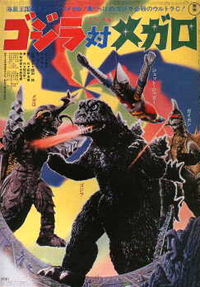
Godzilla vs. Megalon?

How else to describe a court battle between the two titans of enterprise software, Oracle and SAP? Heavyweights, both.

On March 22, 2007, Oracle filed suit against SAP alleging corporate theft. Per Oracle's filing:

"This case is about corporate theft on a grand scale, committed by the largest German software company—a conglomerate known as SAP," the lawsuit says. "From that Web site, SAP has copied and swept thousands of Oracle software products and other proprietary and confidential material onto its own servers."

My initial reaction to the news was "Whoa. SAP just made a big mistake". In the fullness of the news cycle, however, further details arrived, via a story in one of last week's issues of the WSJ (subscription req'd) entitled "SAP Unit Denies Oracle's Claims":

According to the complaint, TomorrowNow in some cases accessed information using log-in information for Oracle customers with expired support contracts. In other cases, TomorrowNow accessed information beyond what customers were entitled to access, according to the suit.

My reaction after reading this bit of news, in a story focused on SAP's proclamation of innocence, was that Oracle's position isn't quite as iron-clad as it had first appeared to be. 

I'm not the only one who thinks so. Wired Magazine, in an interesting article, also from last week, entitled "Is Oracle Using Computer Crime Law to Squelch Competition?" questions how different the case would be had the Oracle customers simply provided written manuals in their possession to the SAP subsidiary. Further, Jennifer Granick, the author of the Wired article, doesn't pick a likely winner in the case, but seems dismayed at the prospect of Oracle's succeeding in their suit, but doing so simply because the access was electronic rather than physical.

There's a larger issue that occurred to me in this matter, however. I'm no Oracle maven, but I remember quite vividly the marketing campaign Oracle ran earlier this decade touting "Unbreakable: Oracle's Commitment to Security". Ever since the 2002 debut of that campaign, naysayers have been a dime a dozen. In fact, Oracle itself, by its actions if not its advertising rhetoric, has admitted as much. No less a luminary than Bruce Schneier, founder & CTO of BT Counterpane was quoted thusly:

When they say their software is unbreakable, they're lying.

Ouch. That could have left a mark, directed anywhere other than at Oracle's marketing department, I'd guess.

But unless Oracle has dispensed with the fiction that they, alone in the technology world, are capable of providing a secure database, application, or portal, it would seem as though they're begging for further ridicule when complaining that SAP (via its TomorrowNow subsidiary) was able not only to get into Oracle's systems with expired passwords, but that SAP was also able, as if by magic, to access areas to which those same customer passwords were not authorized.

Friends of mine with cooler heads have pointed out that, if Oracle were attempting to get a customer to sign a new maintenance agreement, they might well have avoided disabling access for those expired accounts. My rejoinder? That still doesn't explain or excuse the fact that their security over this information must be marginal, at best, if they allowed access to items for which the customers weren't authorized.

And one logical conclusion a court could, but wouldn't be forced to, draw, is that Oracle didn't think highly enough of the supposed "corporate secrets" to even put a lock on the door.

Advantage, SAP?

(also posted at a issuesblog.com)

Posted by Patton Patton on   |   § 0